
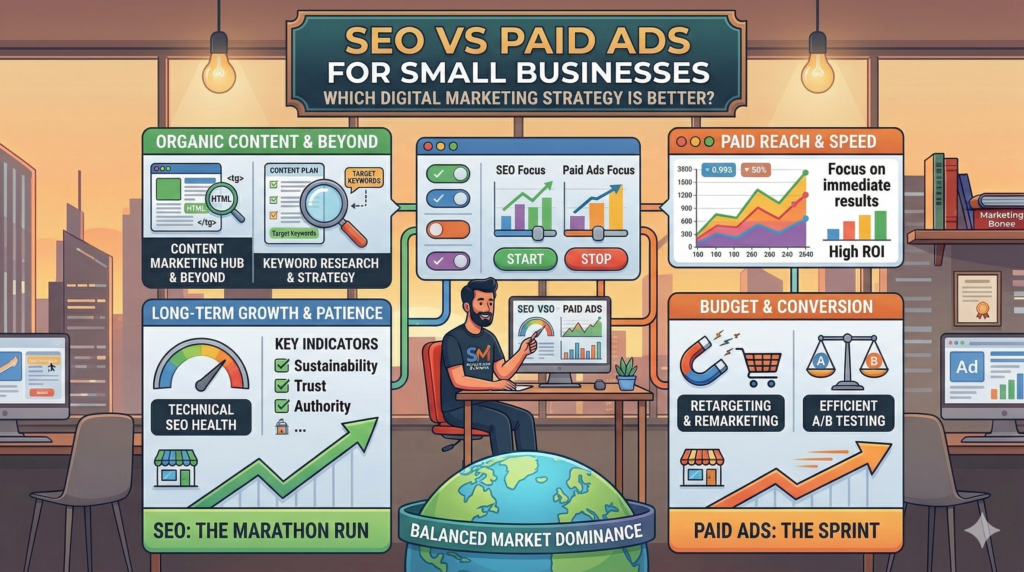
Small business owners often face one major marketing decision: Should you invest in SEO or paid ads?
Both Search Engine Optimization (SEO) and Paid Advertising (PPC) can drive traffic, leads, and sales. However, they work in very different ways and deliver results on different timelines.
Understanding the difference between SEO vs Paid Ads for small businesses can help you choose the right strategy for your budget, goals, and growth stage
In this guide, we’ll break down:
- What SEO is
- What paid ads are
- The pros and cons of each strategy
- Which option is best for small businesses
- How combining both can maximize growth
What Is SEO for Small Businesses?
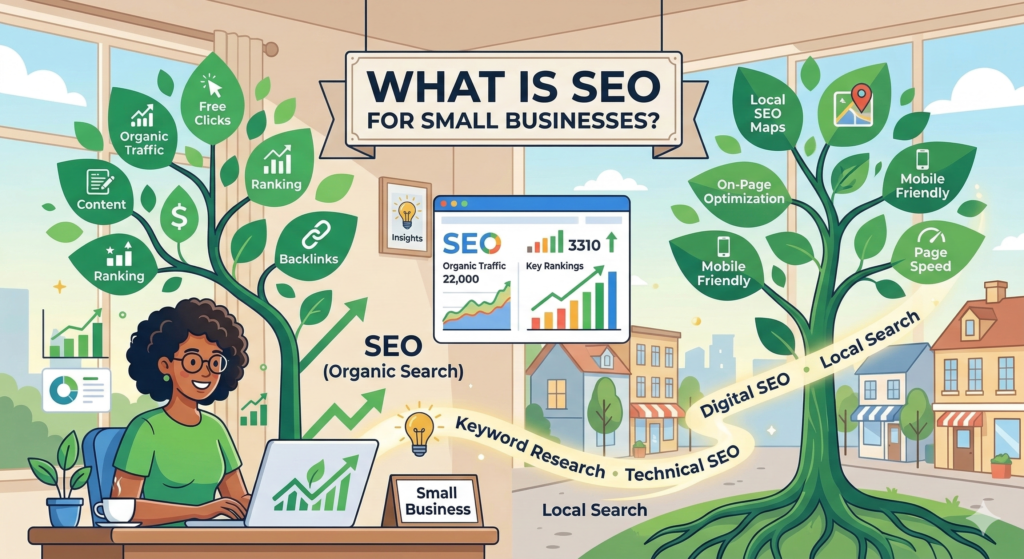
SEO for small businesses refers to optimizing your website so it ranks higher in search engine results like Google. Instead of paying for clicks, SEO helps you earn organic traffic.
When someone searches for services or products related to your business, strong SEO helps your website appear in the top results.
How SEO Works for Small Businesses
SEO works by improving different aspects of your website, including:
- Keyword optimization
- Website speed
- Mobile responsiveness
- Content quality
- Backlinks
- Local SEO optimization
For example, if someone searches for “best digital marketing services near me,” SEO helps your business appear in those search results.
Benefits of SEO for Small Businesses
SEO offers several advantages:
1. Long-Term Traffic Growth
Once your website ranks on Google, it can bring consistent traffic for months or years.
2. Higher Trust and Credibility
Users trust organic search results more than ads.
3. Better ROI Over Time
Although SEO takes time, it often delivers a higher return on investment in the long run.
4. Consistent Lead Generation
SEO helps businesses attract customers actively searching for their services.
What Are Paid Ads for Small Businesses?
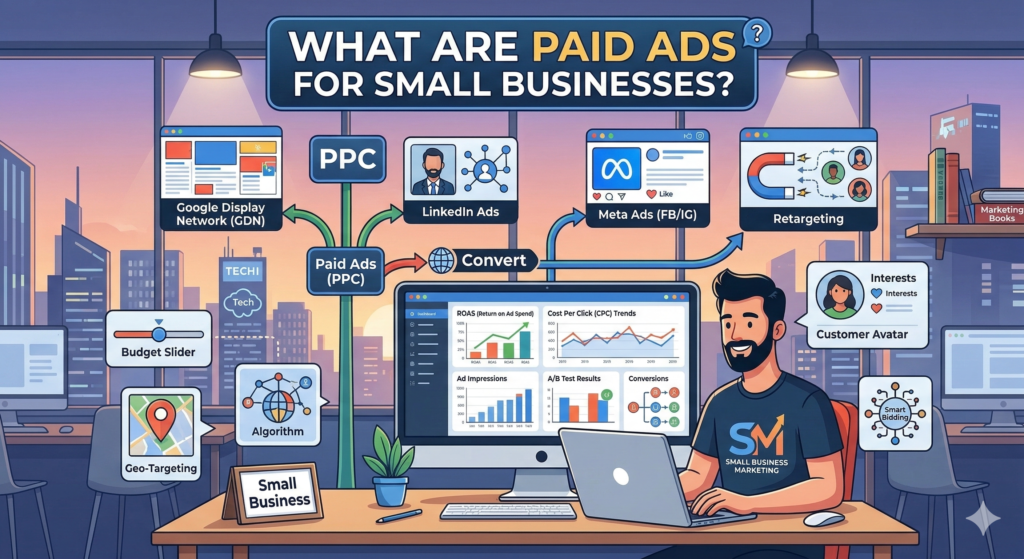
Paid advertising (also known as PPC – Pay Per Click advertising) allows businesses to appear instantly in search results or social media feeds by paying for visibility.
With paid ads, businesses pay every time someone clicks on their advertisement.
Common paid advertising platforms include:
- Google Ads
- Facebook Ads
- Instagram Ads
- LinkedIn Ads
How Paid Ads Work for Small Businesses
When running paid ads, businesses:
- Choose target keywords or audiences
- Create advertisements
- Set a daily budget
- Pay for each click or impression
For example, a business running Google Ads for “website design services” may appear at the top of search results instantly.
Benefits of Paid Ads for Small Businesses
Paid advertising offers several advantages:
1. Instant Traffic
Unlike SEO, paid ads can generate traffic immediately.
2. Highly Targeted Marketing
You can target audiences based on location, interests, behavior, and demographics.
3. Quick Testing and Optimization
Businesses can test different ad campaigns and quickly see what works best.
4. Scalable Marketing Strategy
Increasing the ad budget can quickly increase traffic and leads.
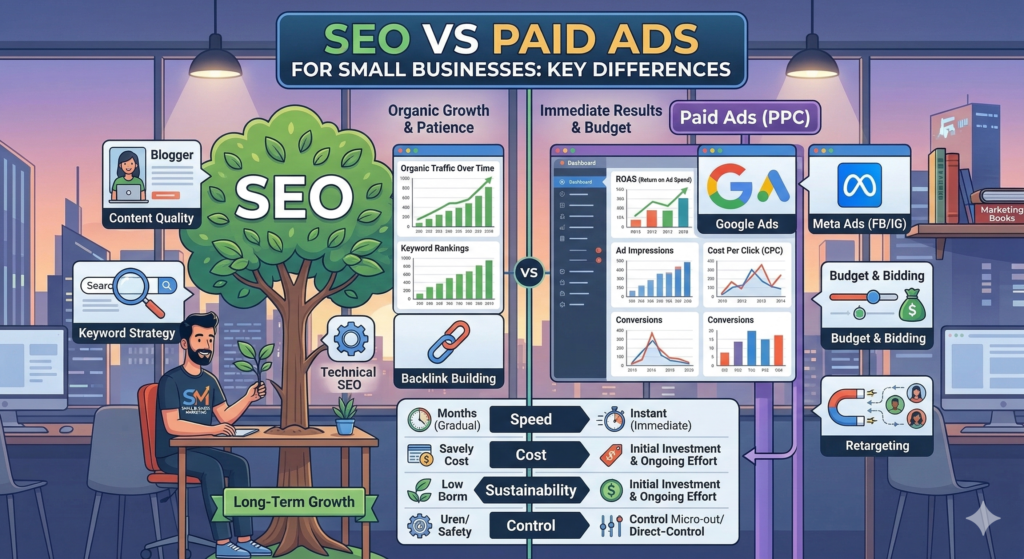
SEO vs Paid Ads for Small Businesses: Key Differences
Understanding the key differences between SEO vs Paid Ads helps businesses make informed marketing decisions.
Understanding the key differences between SEO vs Paid Ads helps businesses make informed marketing decisions.
SEO Cost Structure
- Upfront investment
- Content creation
- Technical optimization
- Link building
SEO traffic is free after ranking, making it cost-effective long term.
Paid Ads Cost Structure
- Pay per click
- Ongoing ad budget
- Campaign management
Once the budget stops, traffic stops immediately.
Speed of Results: SEO vs Paid Ads
SEO
- Takes 3–6 months for strong results
- Long-term traffic growth
Paid Ads
- Immediate visibility
- Instant traffic generation
If a business needs quick leads, paid ads work faster
Sustainability: SEO vs Paid Advertising
SEO is a long-term marketing strategy.
Once your website ranks, it can continue bringing visitors without ongoing ad costs.
Paid ads, however, require continuous spending to maintain traffic.
When Should Small Businesses Choose SEO?
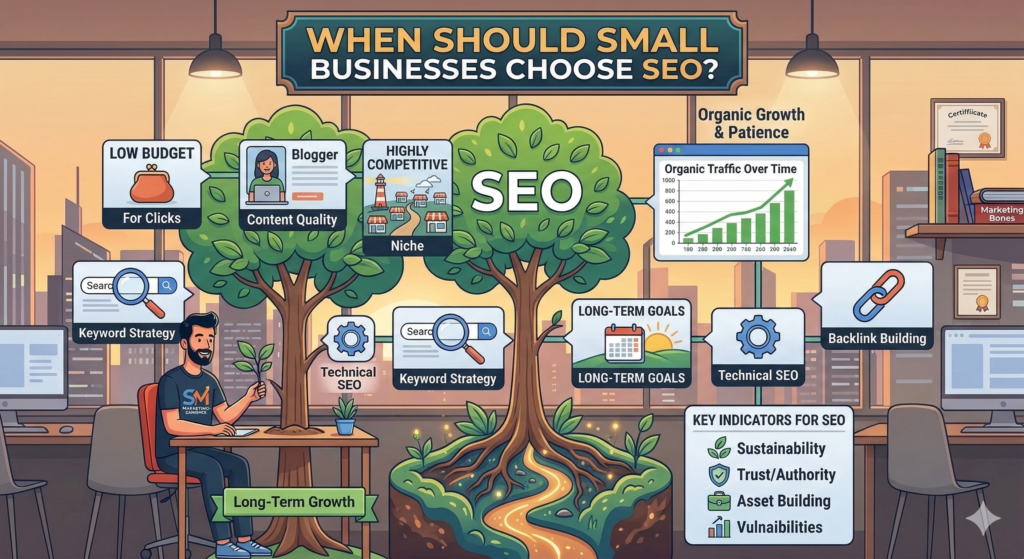
SEO is the best strategy when businesses want long-term growth and sustainable traffic.
SEO Is Best For:
- Businesses with limited marketing budgets
- Companies focusing on long-term growth
- Local businesses targeting Google search traffic
- Businesses building online authority
For example, local service businesses like plumbing, marketing agencies, and law firms benefit greatly from SEO.
When Should Small Businesses Choose Paid Ads?
Paid ads are ideal when businesses need fast results and immediate visibility.
Paid Ads Work Best For:
- New businesses launching products
- Limited-time promotions
- Seasonal campaigns
- Competitive industries
Paid advertising allows businesses to quickly generate leads while building their organic presence.
The Best Strategy: Combining SEO and Paid Ads
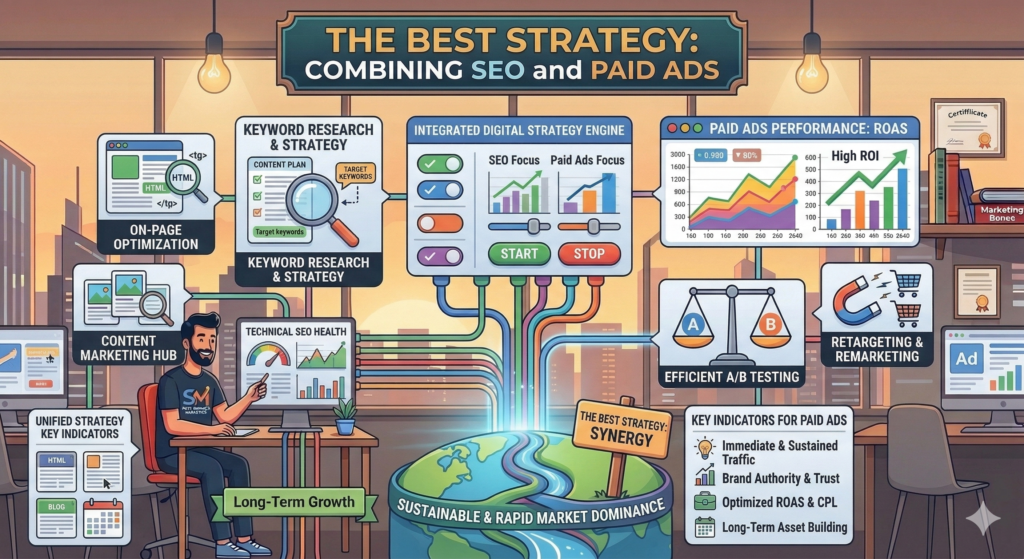
For many businesses, the best approach is combining SEO and paid advertising.
Using both strategies provides the benefits of short-term traffic and long-term growth
How SEO and Paid Ads Work Together
Businesses can use paid ads to:
- Generate immediate traffic
- Test high-performing keywords
- Promote new products or services
Meanwhile, SEO builds long-term organic visibility.
This combined strategy ensures consistent traffic, brand authority, and higher conversion rates.
Final Thoughts: SEO vs Paid Ads for Small Businesses
Choosing between SEO vs Paid Ads for small businesses depends on your goals, budget, and timeline.
SEO is best for long-term growth and sustainable traffic.
Paid ads are ideal for immediate results and fast lead generation.
For most businesses, the most effective digital marketing strategy is using both SEO and paid advertising together.
By balancing organic search visibility and paid campaigns, small businesses can maximize traffic, increase leads, and grow their brand online.