
Introduction
In today’s fast-paced digital world, small businesses often focus heavily on online marketing—social media, SEO, and paid ads. While these channels are powerful, relying only on digital strategies can limit your reach. Direct Mail Marketing is making a strong comeback, helping businesses cut through digital noise and connect with customers in a more personal, tangible way.
If you’re a small business owner wondering whether traditional marketing still matters, the answer is simple: marketing is essential—and combining digital with direct mail creates unstoppable growth.
What Happens When Small Businesses Ignore Marketing?

Without proper marketing, even the best products or services remain invisible. Many small businesses struggle because they:
- Fail to reach the right audience
- Depend only on word-of-mouth
- Have no consistent lead generation system
- Lose customers to competitors with better visibility
The truth is: No marketing = No growth.
Why Marketing Is Important for Small Businesses
Marketing is the backbone of any successful business. Whether you’re running a local store or an online brand, effective marketing helps you:
1. Build Brand Awareness
Customers can’t buy from you if they don’t know you exist. Marketing ensures your business is visible across multiple channels.
2. Generate Consistent Leads
A structured marketing strategy creates a predictable flow of leads and inquiries.
3. Increase Sales & Revenue
With the right messaging and targeting, marketing directly impacts your bottom line.
4. Build Trust & Credibility
Consistent marketing—both online and offline—positions your business as reliable and professional.
5. Stay Ahead of Competitors
Businesses that invest in marketing grow faster than those that don’t.
What Is Direct Mail Marketing?
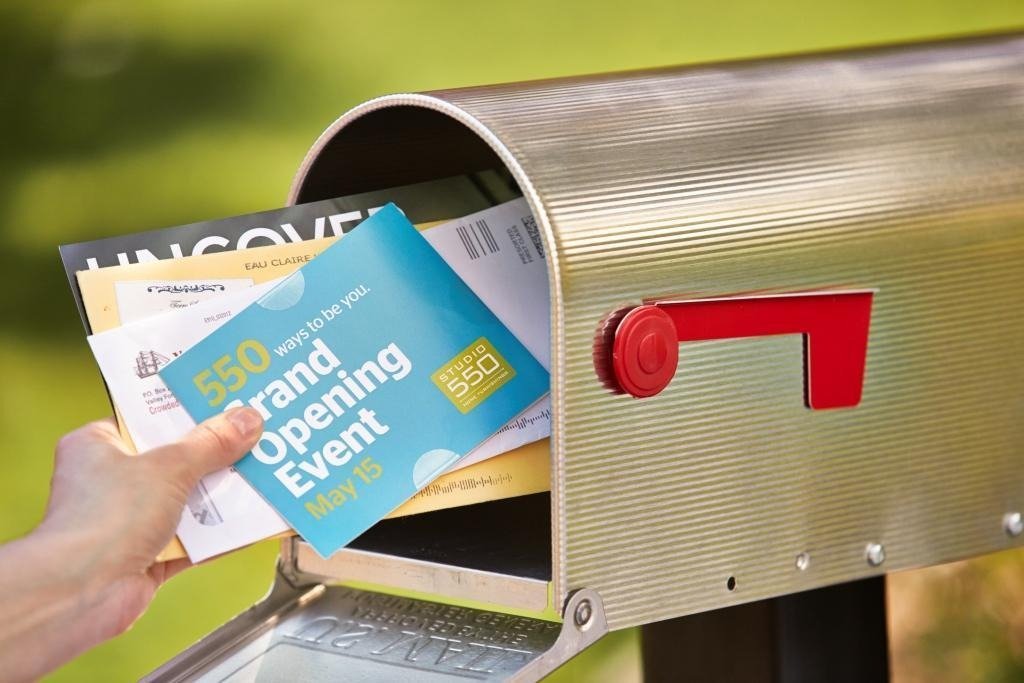
Direct Mail Marketing is a strategy where businesses send physical promotional materials—such as postcards, brochures, catalogs, or letters—directly to potential customers.
Unlike digital ads that disappear in seconds, direct mail creates a physical connection with your audience.
Common Types of Direct Mail:
Coupons & offers
Postcards
Flyers & brochures
Catalogs
Promotional letters
Why Direct Mail Marketing Still Works in a Digital World
Many people assume direct mail is outdated—but in reality, it’s more effective than ever when used strategically.
1. Less Competition = More Attention
Inboxes are flooded with emails, but physical mailboxes are not. This gives your message higher visibility.
2. Tangible & Memorable
People remember something they can touch. A well-designed postcard leaves a lasting impression.
3. Higher Engagement Rates
Direct mail often gets higher open and response rates compared to digital ads.
4. Builds Trust
Physical communication feels more credible than online ads, especially for local businesses.
5. Works Perfectly with Digital Marketing
You can combine direct mail with:
- QR codes
- Landing pages
- Retargeting ads
Direct Mail + Digital Marketing = Powerful Growth System

The real magic happens when you combine traditional and digital marketing.
Example Strategy:
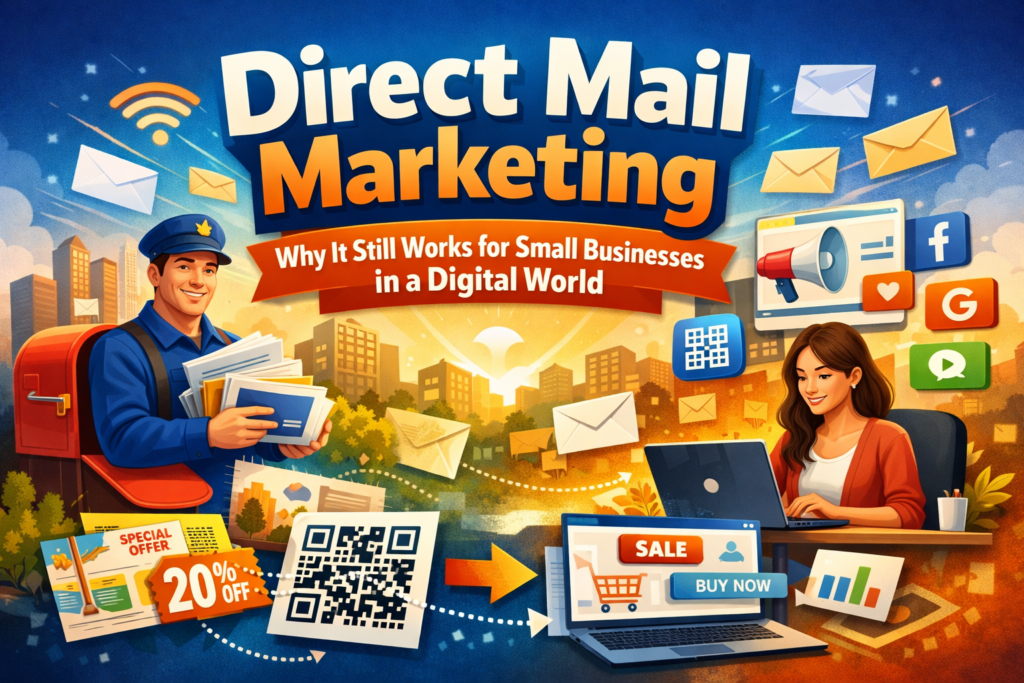
- Send a direct mail postcard with an offer
- Add a QR code linking to your website
- Capture leads through a landing page
- Retarget them with Facebook or Google ads
This approach ensures:
- Higher conversion rates
- Better customer tracking
- Improved ROI
Real Benefits of Direct Mail Marketing for Small Businesses
- Highly targeted audience reach
- Increased response rates
- Better return on investment (ROI)
- Stronger customer relationships
- Local marketing advantage
How Small Businesses Can Use Direct Mail Effectively
1. Target the Right Audience
Use location-based or interest-based mailing lists.
2. Focus on Strong Design
Your mail piece should be visually appealing and easy to read.
3. Add a Clear Call-to-Action (CTA)
Examples:
- “Scan to get 20% off”
- “Visit our website today”
4. Personalize Your Message
Personalized mail increases engagement and response rates.
5. Track Results
Use QR codes, unique links, or promo codes to measure performance.
Common Mistakes to Avoid
- Sending generic messages
- Poor design quality
- No tracking system
- Targeting the wrong audience
- Ignoring follow-ups
Why Small Businesses Should Invest in Direct Mail Marketing Today
In a crowded digital landscape, standing out is harder than ever. Direct Mail Marketing gives small businesses a unique advantage by offering:
- A personal touch
- Higher visibility
- Better engagement
When combined with digital marketing, it becomes a complete growth system that drives long-term success.
How “We Do For You” Helps You Grow
At We Do For You, we don’t just offer marketing services—we build end-to-end growth systems.
Our approach includes:
- Strategy development
- Direct mail campaign design & execution
- SEO & digital marketing integration
- Conversion optimization
Conclusion
Marketing is no longer optional—it’s essential for survival and growth. While digital marketing dominates the landscape, Direct Mail Marketing continues to prove its effectiveness, especially for small businesses.
By combining online and offline strategies, you can create a powerful system that delivers real, measurable results.
Ready to grow your business?
Start building a marketing system that actually works.
What is direct mail marketing?
Direct mail marketing involves sending physical promotional materials like postcards and brochures to targeted customers.
Why is marketing important for small businesses?
Marketing helps businesses gain visibility, generate leads, and increase sales consistently.
Does direct mail marketing still work in 2026?
Yes, it works effectively when combined with digital marketing strategies
Is direct mail better than digital marketing?
Both work best when used together as part of an integrated marketing strategy.