
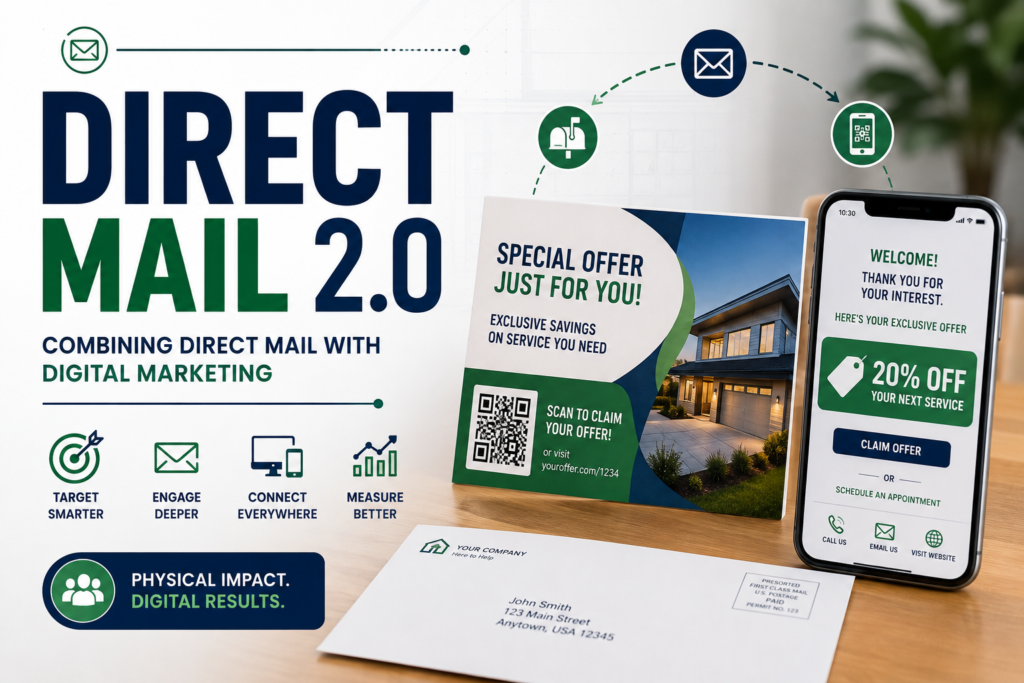
Marketing has changed dramatically as businesses now have more ways to reach customers than ever before. Search engines, social media, email, online advertising, and content marketing have become essential parts of modern marketing strategies. At the same time, direct mail continues to offer businesses a physical way to connect with potential and existing customers.
Direct Mail 2.0 combines the advantages of traditional direct mail with the targeting, personalization, automation, and measurement capabilities of digital marketing. Instead of treating physical mail and online marketing as separate strategies, businesses can connect them to create a more complete customer journey.
If you’re looking to combine direct mail with your digital strategy, Get a Free Quote to discuss your audience, campaign goals, mailing strategy, and digital marketing needs.
In this guide, we’ll explain what Direct Mail 2.0 means, how it works, and seven effective ways businesses can combine direct mail with digital marketing to generate leads, increase engagement, and improve campaign performance.
What Is Direct Mail 2.0?
Direct Mail 2.0 refers to the integration of traditional direct mail with digital marketing channels and technology.
Traditional direct mail may involve sending:
- Postcards
- Letters
- Brochures
- Flyers
- Catalogs
- Promotional mailers
Direct Mail 2.0 adds digital elements such as:
- QR codes
- Personalized landing pages
- Email marketing
- Social media
- Online advertising
- Marketing automation
- CRM systems
- Digital analytics
- Online forms
The objective is to create a connected marketing experience where physical mail encourages recipients to take a digital action.
For example:
Postcard → QR Code → Landing Page → Lead Form → Email Follow-Up → Sales Conversion
This approach allows businesses to use the physical visibility of direct mail while taking advantage of digital tools that make campaigns easier to track and optimize.
Why Direct Mail and Digital Marketing Work Well Together
Direct mail and digital marketing have different strengths.
Direct mail gives businesses a physical presence in the customer’s environment. A postcard can be placed on a kitchen counter, refrigerator, desk, or bulletin board where it may remain visible after the recipient initially sees it.
Digital marketing, meanwhile, makes it easy for customers to interact with a business immediately. They can click, scan, submit a form, make a purchase, schedule an appointment, or contact a company online.
Combining the two channels can create multiple opportunities for customers to interact with a brand.
1. Use QR Codes to Connect Physical Mail With Digital Marketing
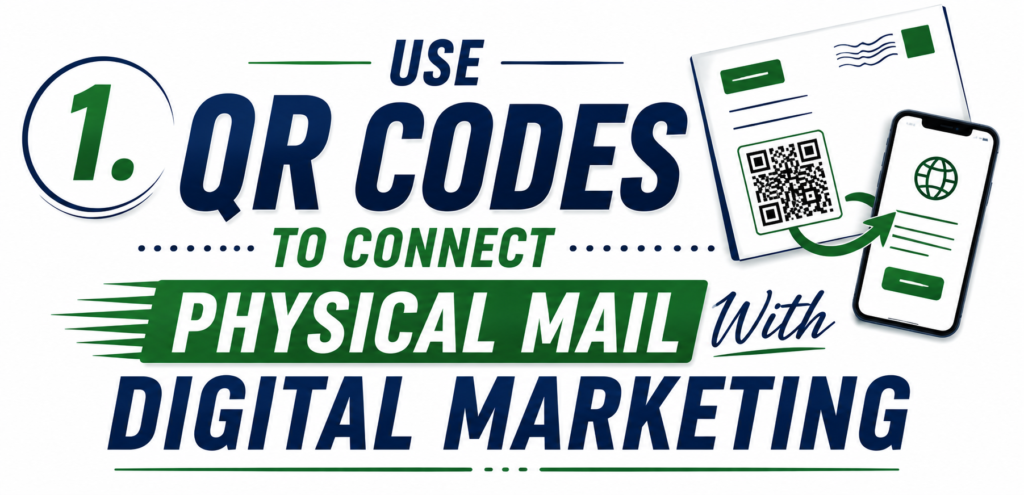
QR codes are one of the simplest ways to connect a physical mailpiece with an online experience.
A recipient can scan a QR code using a smartphone and immediately access a specific digital destination.
Businesses can use QR codes to send customers to:
- Landing pages
- Online stores
- Appointment scheduling pages
- Contact forms
- Special offers
- Product pages
- Event registration
- Online menus
- Digital catalogs
For example, a local dental practice could send a postcard offering a new-patient promotion.
The postcard could say:
“New Patients: Schedule Your Appointment Today”
A QR code could then take the recipient directly to an online booking page.
This reduces the steps required to move from seeing the advertisement to taking action.
Make the QR Code Easy to Use
The QR code should be large enough to scan easily and placed somewhere visible on the postcard.
The destination page should also be:
- Mobile-friendly
- Fast-loading
- Relevant to the offer
- Easy to navigate
- Focused on one primary action
A QR code is only useful if the digital experience that follows is convenient.
2. Use Personalized Mail Advertising
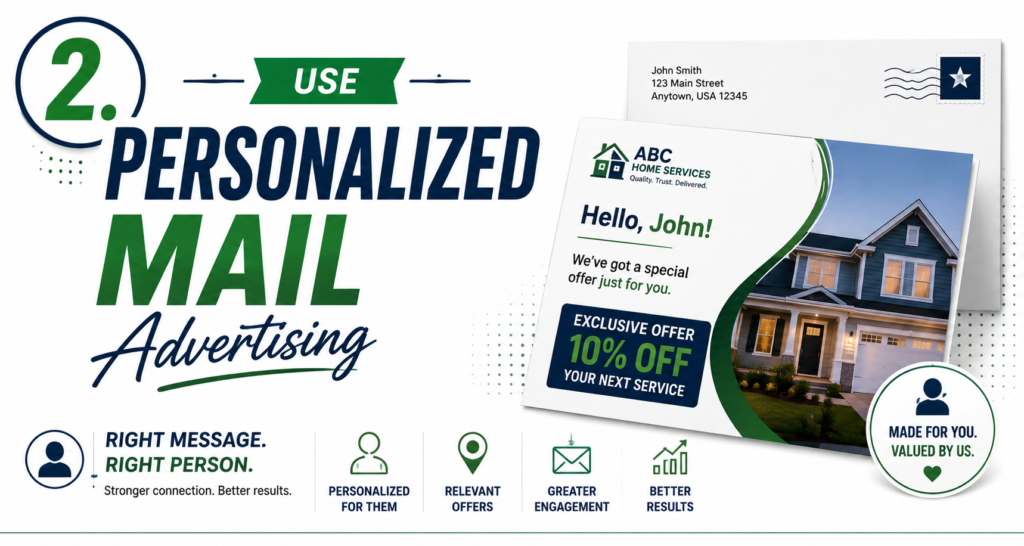
Personalization is an important part of modern marketing.
Businesses can use customer information to make their direct mail more relevant to specific audiences.
Depending on the available data, personalization can include:
- Customer names
- Locations
- Neighborhoods
- Previous purchases
- Customer preferences
- Service interests
- Special offers
- Personalized URLs
For example, a home services company could create different postcards for homeowners in different service areas.
A real estate professional could send neighborhood-specific market information.
A retailer could provide a promotion based on a customer’s previous purchase.
Personalization can make mail advertising feel more relevant than a generic message sent to everyone.
Combine Personalized Mail With Digital Follow-Up
Personalization doesn’t have to stop with the postcard.
A business can create a consistent experience across its marketing channels.
For example:
Personalized postcard → Personalized landing page → Email follow-up → Retargeting advertisement
This creates a connected experience where each marketing channel supports the next step.
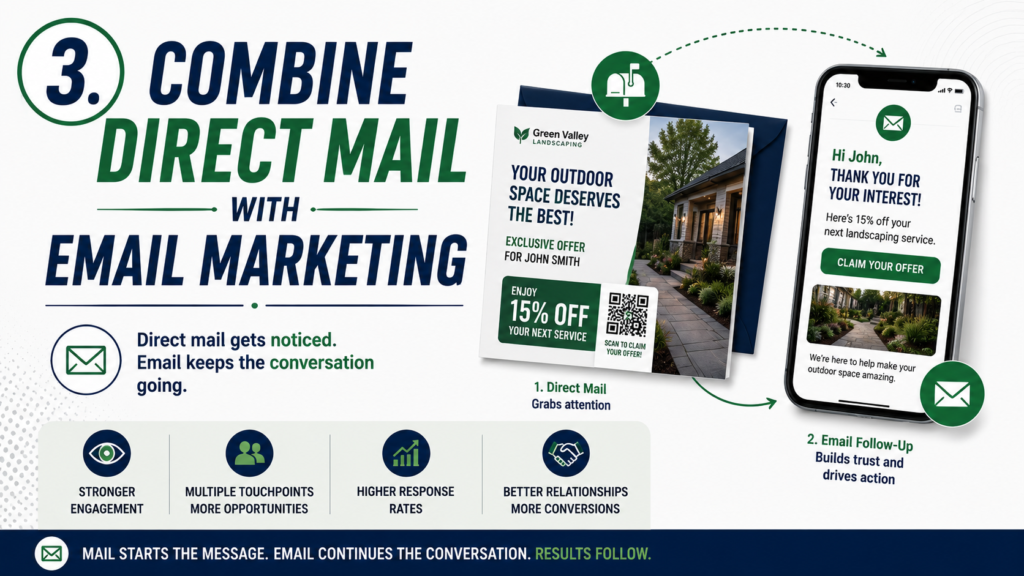
3. Combine Direct Mail With Email Marketing
Email and direct mail can work together throughout the customer journey.
For example, a business may send a postcard announcing a limited-time promotion.
The customer then visits the company’s website and provides an email address.
The business can follow up with:
- A reminder email
- Additional product information
- A promotional message
- A customer testimonial
- A deadline reminder
- A link to schedule an appointment
This allows direct mail to introduce the message while email provides additional communication.
Maintain Consistent Messaging
Your postcard and emails should have a consistent look and message.
Keep elements such as:
- Logo
- Brand identity
- Offer
- Headline
- Call-to-action
- Promotional language
aligned across channels.
Consistency helps customers recognize that different marketing messages are part of the same campaign.
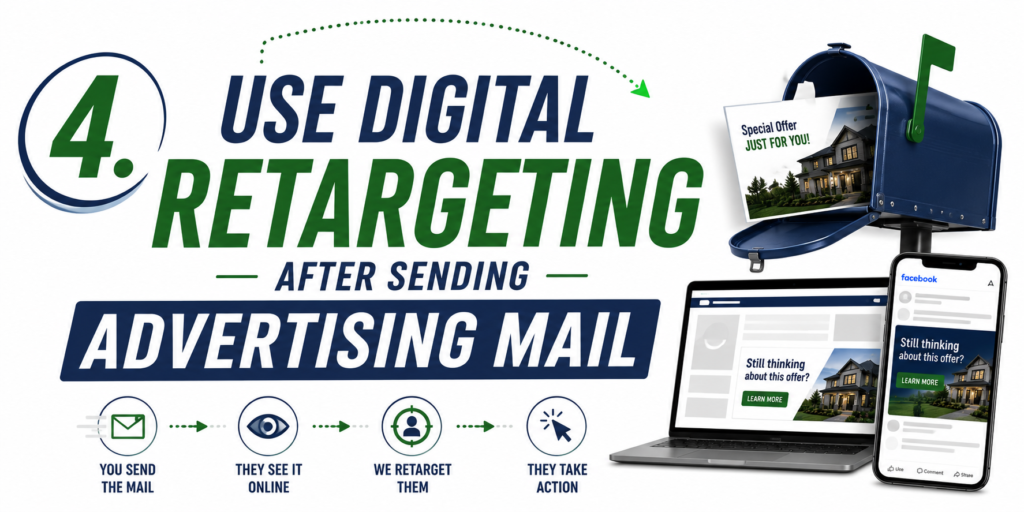
4. Use Digital Retargeting After Sending Advertising Mail
Digital retargeting can extend the reach of a direct mail campaign.
For example, a recipient may receive a postcard and then visit the company’s website.
If appropriate tracking and advertising systems are in place, that website interaction can become part of a digital marketing journey.
The customer might then see relevant online advertising after leaving the website.
A campaign could follow this path:
Send advertising mail → Website visit → Digital engagement → Retargeting → Return visit → Conversion
This gives businesses another opportunity to communicate with potential customers after the initial physical touchpoint.
Focus on Relevant Retargeting
Retargeting should support the original campaign rather than overwhelm the customer.
Use it to remind customers about:
- Products
- Services
- Promotions
- Events
- Appointments
- Limited-time offers
The digital message should remain relevant to the action the customer originally took.
5. Use Landing Pages to Improve Conversions
A direct mail campaign can generate awareness, but the next step needs to be easy.
Instead of sending recipients to a general homepage, businesses can create a dedicated landing page for their campaign.
A landing page can focus on:
- One offer
- One audience
- One product
- One service
- One call-to-action
For example, a roofing company could send postcards to homeowners and direct them to a landing page offering a free roof inspection.
The landing page might include:
- Service information
- Customer reviews
- Photos
- Offer details
- Contact form
- Appointment scheduling
This creates a direct connection between the mailpiece and the customer’s desired action.
6. Use Data to Measure Campaign Performance
One of the biggest benefits of combining direct mail with digital marketing is improved measurement.
Traditional direct mail can sometimes make it difficult to determine exactly how recipients respond.
Digital tools can provide additional information.
Businesses can track:
- QR code scans
- Website visits
- Landing page traffic
- Form submissions
- Online purchases
- Appointment requests
- Promotional code usage
- Phone inquiries
- Leads
- Sales
For example, a business can create a unique landing page specifically for its postcard campaign.
The company can then compare campaign traffic and conversions with its overall marketing performance.
Important Direct Mail Metrics
Depending on your objectives, consider tracking:
- Response rate
- Conversion rate
- Cost per lead
- Customer acquisition cost
- Website traffic
- QR code scans
- Sales generated
- Revenue
- Return on investment
These metrics can help identify what worked and what should be improved in future campaigns.
7. Automate Follow-Up After Direct Mail
Direct Mail 2.0 becomes even more powerful when automation is added to the campaign.
Instead of waiting for customers to respond manually, businesses can create workflows around customer actions.
For example:
A customer receives a postcard → Scans the QR code → Completes a form → Receives an email → Sales team receives the lead → Customer gets a follow-up message
Automation can help businesses respond quickly while maintaining consistent communication.
Automated follow-up can be used for:
- New leads
- Appointment requests
- Product inquiries
- Promotional campaigns
- Customer reactivation
- Abandoned purchases
- Service reminders
The specific workflow will depend on the business, audience, technology, and campaign goals.
How to Build a Direct Mail 2.0 Campaign
Creating a connected campaign starts with a clear strategy.
Step 1: Define Your Goal
Decide what you want your campaign to accomplish.
Possible goals include:
- Generate qualified leads
- Increase sales
- Promote a new service
- Drive website traffic
- Increase appointments
- Promote an event
- Re-engage previous customers
- Build local brand awareness
Your goal should determine your audience, offer, messaging, and tracking strategy.
Step 2: Identify Your Target Audience
Determine who should receive your mail.
Consider:
- Location
- ZIP codes
- Demographics
- Customer history
- Service area
- Purchase behavior
- Business type
- Customer lifecycle stage
Better targeting can help businesses reduce wasted marketing spend and improve campaign relevance.
Step 3: Choose the Right Mail Format
Choose a format that fits your campaign.
Common options include:
- Postcards
- Letters
- Brochures
- Flyers
- Catalogs
- Personalized mailers
Postcards are particularly useful when businesses need to communicate a simple offer quickly.
Step 4: Create a Strong Offer
Your campaign should give recipients a reason to act.
Examples include:
- Free consultations
- Free estimates
- Percentage discounts
- Exclusive promotions
- Limited-time offers
- New customer discounts
- Event invitations
A strong offer can make the difference between a customer simply noticing your postcard and actually responding to it.
Step 5: Add a Digital Call-to-Action
Give recipients an easy way to move from the physical mailpiece to the digital experience.
Examples include:
- Scan the QR code
- Visit our website
- Claim your offer online
- Book an appointment
- Request a quote
- Shop online
Make the next step obvious.
Step 6: Create a Follow-Up Strategy
Decide what happens after a customer interacts with your campaign.
Your follow-up might include:
- Phone call
- SMS
- Retargeting
- Additional direct mail
- Sales outreach
Step 7: Track and Optimize
Review campaign performance and identify opportunities to improve.
Test different:
- Headlines
- Offers
- Designs
- Audiences
- Calls-to-action
- Landing pages
Use the results to improve future campaigns.
How Businesses Can Send Advertising Mail More Strategically
Businesses should focus on relevance rather than simply increasing mailing volume.
Before you send advertising mail, consider four key questions:
Who Are You Targeting?
Understand your ideal customer and where they are located.
What Are You Offering?
Give customers a clear reason to respond.
What Should They Do Next?
Use one strong call-to-action.
How Will You Measure Results?
Set up tracking before launching your campaign.
Answering these questions can help create a more focused campaign.
Benefits of Direct Mail 2.0
Combining direct mail and digital marketing can provide several advantages.
More Customer Touchpoints
Customers can interact with your business through physical mail, websites, email, social media, and online advertising.
Better Personalization
Customer data can be used to create more relevant marketing experiences.
Stronger Brand Awareness
Repeated exposure across different channels can reinforce your brand.
Easier Tracking
Digital tools can help businesses measure what happens after a recipient interacts with a mailpiece.
Improved Lead Generation
A postcard can introduce an offer and direct customers to a form, landing page, or appointment system.
Better Customer Experience
Customers can move from physical marketing to digital action with fewer steps.
Industries That Can Use Direct Mail 2.0
Direct Mail 2.0 can be adapted for many industries.
Real Estate
Real estate professionals can combine postcards with property pages, online valuation forms, social media, and digital advertising.
Home Services
Roofing, plumbing, HVAC, landscaping, and remodeling businesses can use mailers to promote services and direct customers to online quote forms.
Healthcare and Dental
Practices can promote services, new-patient offers, and appointment scheduling while following applicable privacy and regulatory requirements.
Restaurants
Restaurants can send promotional postcards that direct customers to online menus, ordering pages, or special offers.
Retail and E-Commerce
Retailers can use direct mail to promote products and then direct customers to online stores.
Professional Services
Law firms, financial businesses, consultants, agencies, and other professional service providers can use targeted mail alongside digital lead-generation strategies.
Common Direct Mail 2.0 Mistakes to Avoid
A multichannel campaign requires coordination.
Avoid these common mistakes.
Using Too Much Information
Don’t fill your postcard with unnecessary text.
Focus on one primary message and offer.
Sending Customers to a Generic Homepage
A dedicated landing page can make the transition from mail to digital marketing more relevant.
Ignoring Mobile Users
Recipients who scan your QR code will usually be using smartphones, so your landing page should be mobile-friendly.
Inconsistent Branding
Your postcard, landing page, emails, and advertisements should have a consistent visual identity.
Failing to Track Results
Without tracking, it can be difficult to understand the campaign’s actual performance.
Not Following Up
A customer may need multiple interactions before taking action. Build follow-up into your strategy.
Best Practices for Direct Mail 2.0
To create a stronger campaign:
- Define one primary goal.
- Target the right audience.
- Use a compelling offer.
- Keep the postcard message simple.
- Include a clear call-to-action.
- Add a relevant QR code or URL.
- Create a mobile-friendly landing page.
- Keep physical and digital branding consistent.
- Use email and retargeting strategically.
- Track campaign performance.
- Test different offers and creative.
- Use campaign data to improve future mailings.
The objective should be to create a connected customer experience rather than simply adding a QR code to a postcard.
Frequently Asked Questions
What is Direct Mail 2.0?
Direct Mail 2.0 is the combination of traditional direct mail with digital marketing technologies such as QR codes, landing pages, email marketing, online advertising, automation, and analytics.
Is direct mail still effective in 2026?
Direct mail can remain an effective marketing channel when it is properly targeted and integrated with other marketing activities. Combining physical mail with digital channels can create additional customer touchpoints.
How can I send advertising mail to local customers?
Businesses can use targeted mailing lists, geographic targeting, ZIP codes, and other mailing strategies to reach customers in specific areas. The best approach depends on your audience and campaign objectives.
Can direct mail work with social media marketing?
Yes. Direct mail can encourage customers to visit social media profiles, participate in promotions, access online content, or engage with digital campaigns.
How do QR codes help direct mail campaigns?
QR codes allow recipients to move directly from a physical mailpiece to a digital destination such as a landing page, online store, appointment scheduler, or promotional offer.
How can I measure a Direct Mail 2.0 campaign?
Businesses can use QR codes, unique URLs, promotional codes, landing pages, dedicated phone numbers, website analytics, and CRM systems to track customer responses and conversions.
Final Thoughts
Direct Mail 2.0 brings traditional mail into the modern marketing environment by connecting physical marketing with digital technology. Instead of choosing between direct mail and online marketing, businesses can use both channels to create a more complete customer journey.
From QR codes and personalized landing pages to email follow-ups, retargeting, automation, and campaign analytics, businesses have more opportunities to make their direct mail campaigns measurable and relevant.
The key is to build the campaign around the customer. Identify the right audience, create a compelling offer, make the next step simple, and use digital tools to continue the conversation after the mailpiece is delivered.
When businesses strategically combine mail advertising with digital marketing, direct mail can become more than a physical advertisement. It can become an important part of a connected, multichannel marketing strategy.
Ready to modernize your direct mail strategy? Get a Free Quote to discuss how Direct Mail 2.0 can support your business’s lead generation and marketing goals.