

A well-planned direct mail marketing campaign remains one of the most effective ways to reach customers, generate qualified leads, and strengthen brand awareness. While digital marketing channels continue to evolve, direct mail stands out because it delivers a tangible, personalized experience that captures attention and encourages action.
However, simply sending postcards or brochures isn’t enough. Successful campaigns require careful planning, audience targeting, compelling design, and consistent follow-up. Every stage of the process plays a role in determining your campaign’s overall performance.
In this guide, you’ll learn how to build a successful direct mail marketing campaign from start to finish, helping your business maximize response rates and achieve a stronger return on investment.
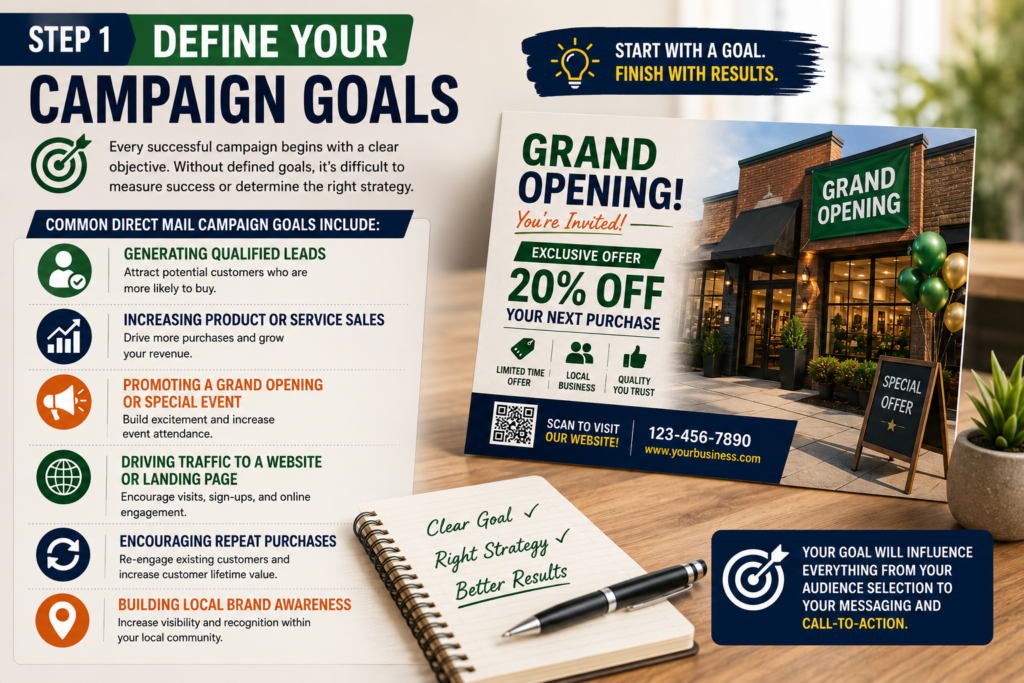
Step 1: Define Your Campaign Goals
Every successful campaign begins with a clear objective. Without defined goals, it’s difficult to measure success or determine the right strategy.
Common direct mail campaign goals include:
- Generating qualified leads
- Increasing product or service sales
- Promoting a grand opening or special event
- Driving traffic to a website or landing page
- Encouraging repeat purchases
- Building local brand awareness
Your goal will influence everything from your audience selection to your messaging and call-to-action.
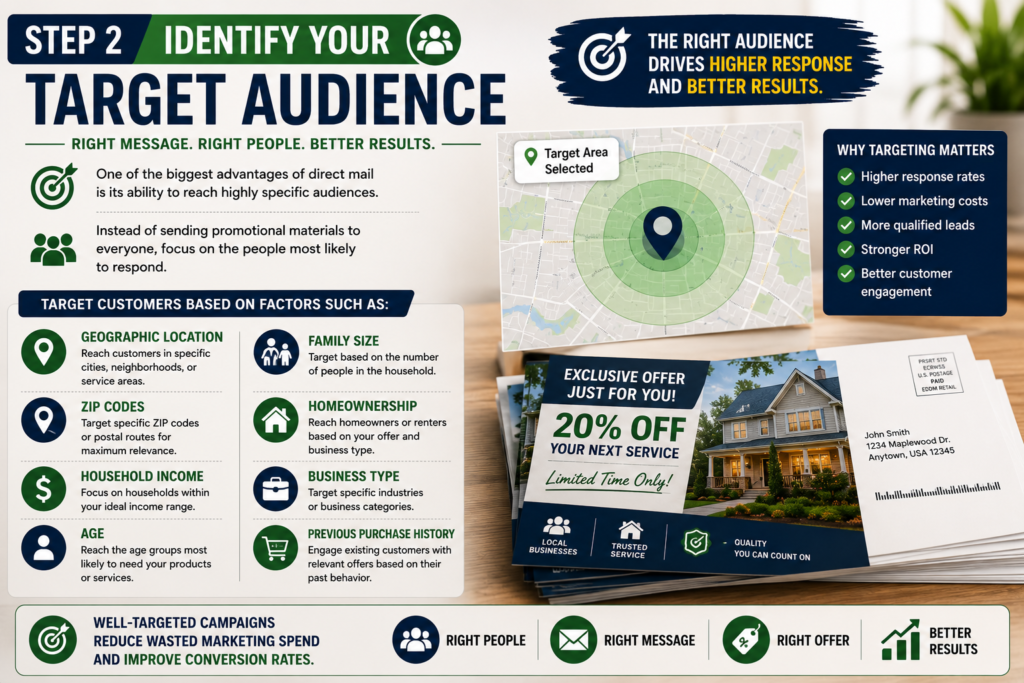
Step 2: Identify Your Target Audience
One of the biggest advantages of direct mail is its ability to reach highly specific audiences.
Instead of sending promotional materials to everyone, focus on the people most likely to respond.
Target customers based on factors such as:
- Geographic location
- ZIP codes
- Household income
- Age
- Family size
- Homeownership
- Business type
- Previous purchase history
Well-targeted campaigns reduce wasted marketing spend and improve conversion rates.
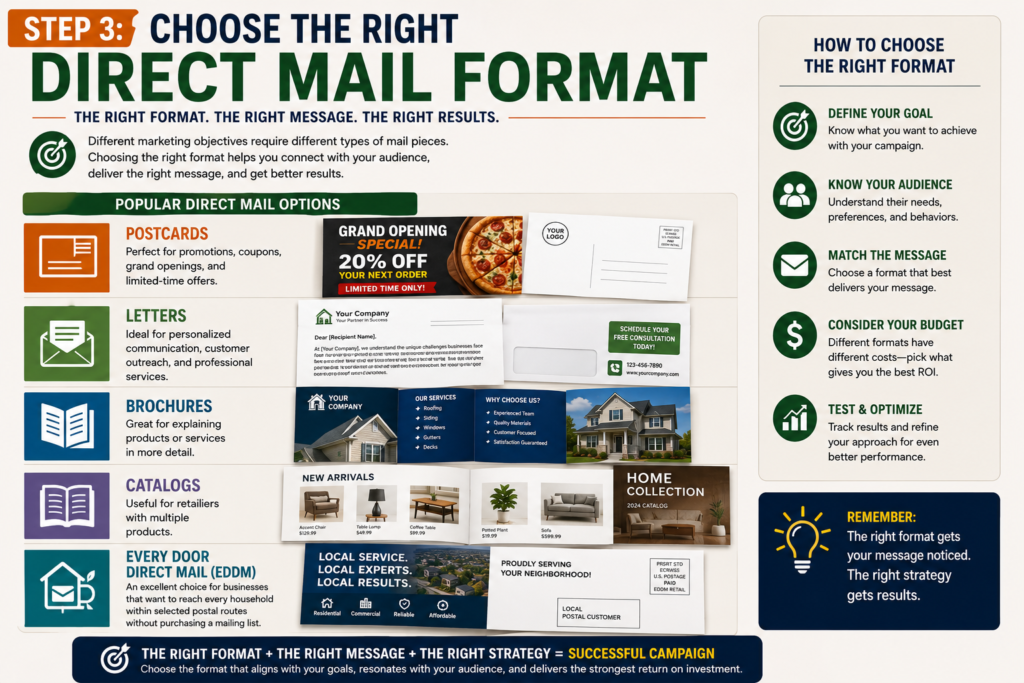
Step 3: Choose the Right Direct Mail Format
Different marketing objectives require different types of mail pieces.
Popular options include:
Postcards
Perfect for promotions, coupons, grand openings, and limited-time offers.
Letters
Ideal for personalized communication, customer outreach, and professional services.
Brochures
Great for explaining products or services in more detail.
Catalogs
Useful for retailers with multiple products.
Every Door Direct Mail (EDDM)
An excellent choice for businesses that want to reach every household within selected postal routes without purchasing a mailing list.
Choosing the right format depends on your campaign objectives and budget.
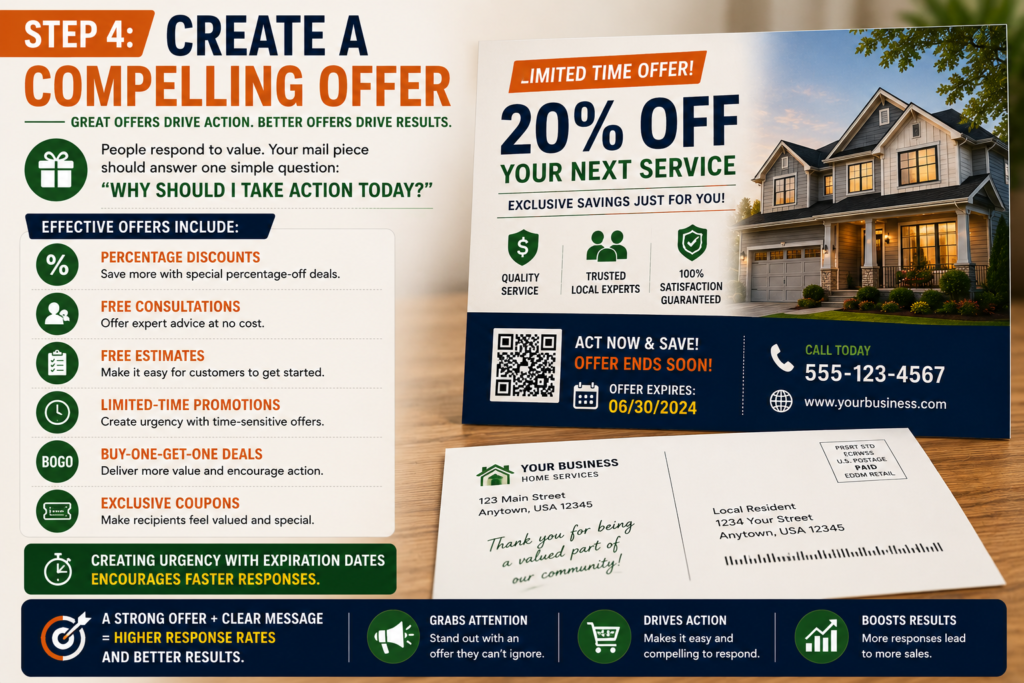
Step 4: Create a Compelling Offer
People respond to value. Your mail piece should answer one simple question:
“Why should I take action today?”
Effective offers include:
- Percentage discounts
- Free consultations
- Free estimates
- Limited-time promotions
- Buy-one-get-one deals
- Exclusive coupons
Creating urgency with expiration dates encourages faster responses.
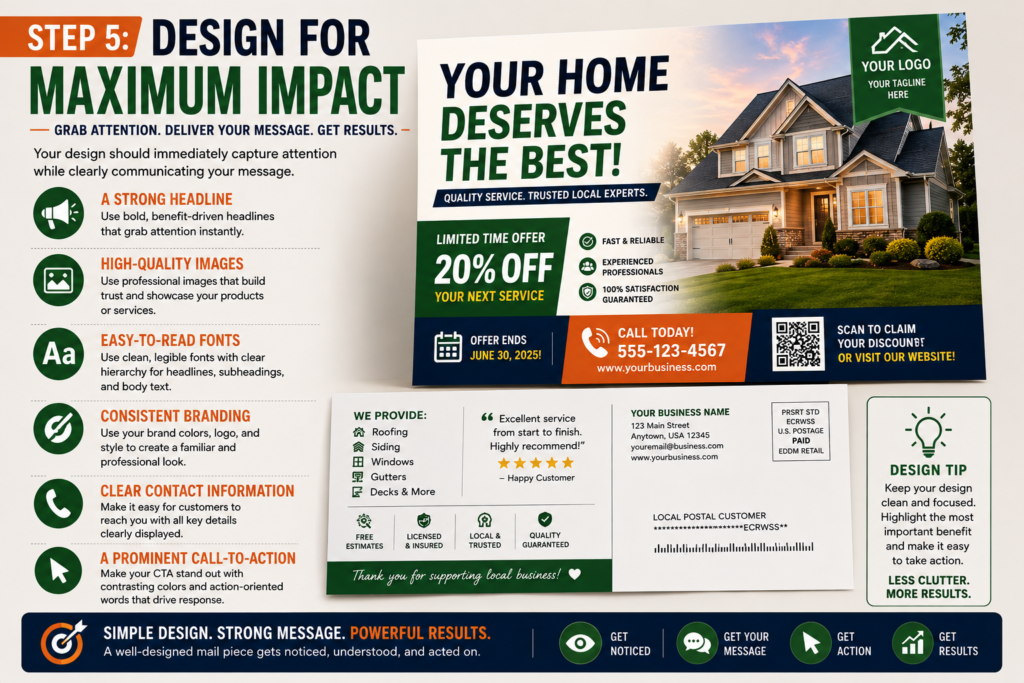
Step 5: Design for Maximum Impact
Your design should immediately capture attention while clearly communicating your message.
Include:
- A strong headline
- High-quality images
- Easy-to-read fonts
- Consistent branding
- Clear contact information
- A prominent call-to-action
Avoid cluttering your design with too much text. Simple, visually appealing layouts tend to perform better.
Step 6: Personalize Your Message
Personalization increases engagement by making recipients feel your message is relevant to them.
Ways to personalize include:
- Using the recipient’s name
- Referencing local neighborhoods
- Tailoring offers based on customer behavior
- Segmenting audiences by demographics
Personalized campaigns often achieve higher response rates than generic mailings.
Step 7: Include a Strong Call-to-Action
Every mail piece should tell recipients exactly what to do next.
Examples include:
- Call today
- Visit our website
- Schedule a consultation
- Redeem your coupon
- Scan the QR code
- Request a free quote
A clear call-to-action removes uncertainty and improves conversions.
Step 8: Connect Print with Digital Marketing
Modern direct mail works best when integrated with digital marketing.
Consider including:
- QR codes
- Personalized landing pages
- Online appointment booking
- Promotional codes
- Social media profiles
This allows recipients to transition seamlessly from print to digital, creating a better customer experience.
Step 9: Print and Mail Professionally
The quality of your printed materials directly reflects your brand.
Professional printing ensures:
- Sharp images
- Accurate colors
- Durable materials
- Consistent branding
- USPS compliance
Partnering with experienced direct mail marketing services can simplify printing, mailing, and logistics while helping your campaign run smoothly.
Step 10: Track Campaign Performance
Measuring results helps you understand what worked and where improvements can be made.
Track metrics such as:
- Response rate
- QR code scans
- Website traffic
- Phone calls
- Coupon redemptions
- Appointment bookings
- Sales generated
Analyzing these metrics enables you to optimize future campaigns and improve ROI.
Common Mistakes to Avoid
Avoid these common pitfalls to maximize campaign performance:
- Targeting the wrong audience
- Sending generic messaging
- Using weak offers
- Overloading the design with text
- Omitting a clear call-to-action
- Failing to track results
- Ignoring follow-up marketing
Small improvements in strategy can lead to significantly better outcomes.
Best Practices for Long-Term Success
To consistently improve your direct mail marketing campaigns:
- Test different headlines and offers.
- Segment your audience for more relevant messaging.
- Keep branding consistent across all marketing channels.
- Integrate direct mail with email, SEO, and social media.
- Review campaign analytics after every mailing.
- Refine your targeting based on performance data.
Successful campaigns are built through continuous testing and optimization.
Frequently Asked Questions
How long does it take to run a direct mail marketing campaign?
Most campaigns take anywhere from two to six weeks, depending on planning, design, printing, and mailing schedules.
What is the best type of direct mail for local businesses?
Postcards and Every Door Direct Mail (EDDM) are popular choices because they provide cost-effective local targeting and broad neighborhood reach.
How can I improve my campaign response rate?
Focus on audience targeting, compelling offers, professional design, personalization, and a strong call-to-action. Tracking performance also helps you refine future campaigns.
Should direct mail be combined with digital marketing?
Yes. Integrating direct mail with email marketing, landing pages, QR codes, and social media creates a multichannel strategy that increases engagement and conversions.
Final Thoughts
Building a successful direct mail marketing campaign requires more than attractive design—it demands thoughtful planning, precise targeting, compelling offers, and continuous optimization. By following a structured process from goal setting to performance tracking, businesses can create campaigns that generate qualified leads, increase customer engagement, and deliver lasting results. When combined with digital marketing strategies, direct mail becomes an even more powerful tool for driving sustainable business growth.