
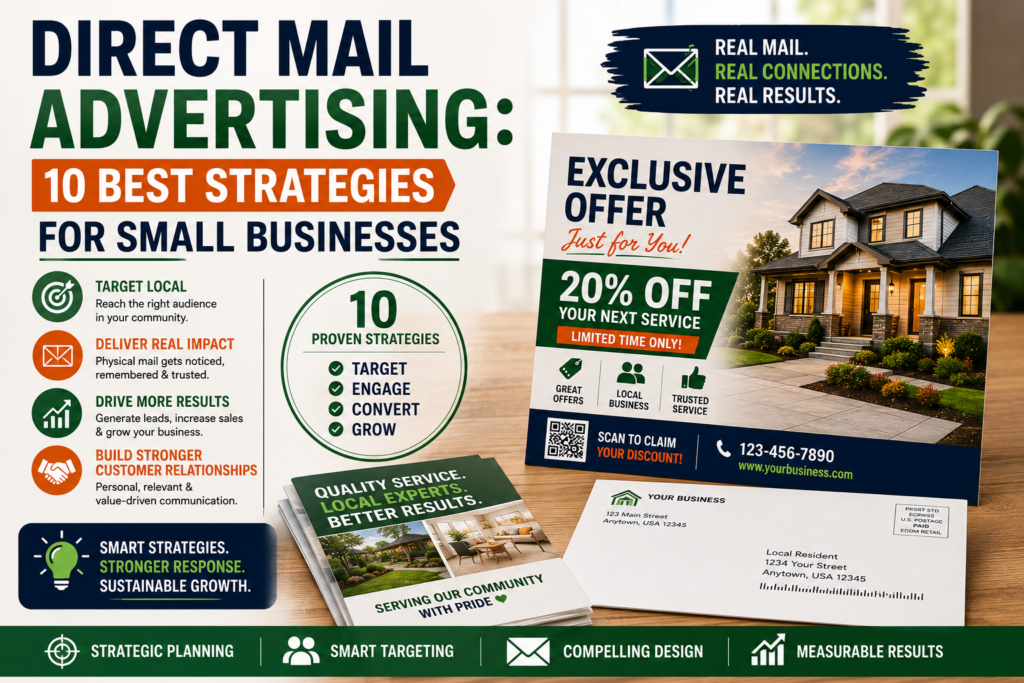
In today’s competitive marketplace, small businesses need marketing strategies that not only capture attention but also deliver measurable results. While digital advertising dominates many marketing budgets, direct mail advertising continues to be one of the most effective ways to reach local customers, build trust, and generate high-quality leads.
Unlike online ads that can easily be skipped or ignored, physical mail creates a lasting impression. Professionally designed direct mailers for business allow companies to communicate directly with potential customers, making every mail marketing campaign more personal and memorable.
In this guide, we’ll explore ten proven strategies that help small businesses maximize the effectiveness of their direct mail campaigns.
Why Direct Mail Advertising Still Works
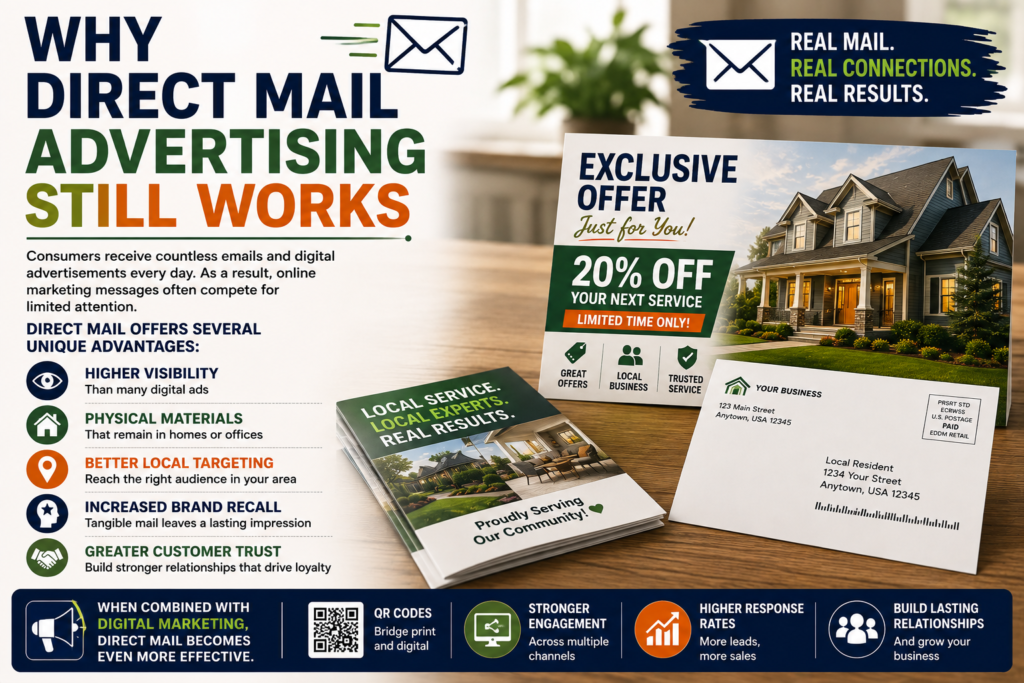
Consumers receive countless emails and digital advertisements every day. As a result, online marketing messages often compete for limited attention.
Direct mail offers several unique advantages:
- Higher visibility than many digital ads
- Physical materials that remain in homes or offices
- Better local targeting
- Increased brand recall
- Greater customer trust
When combined with digital marketing, direct mail becomes even more effective.
1. Define Clear Campaign Goals
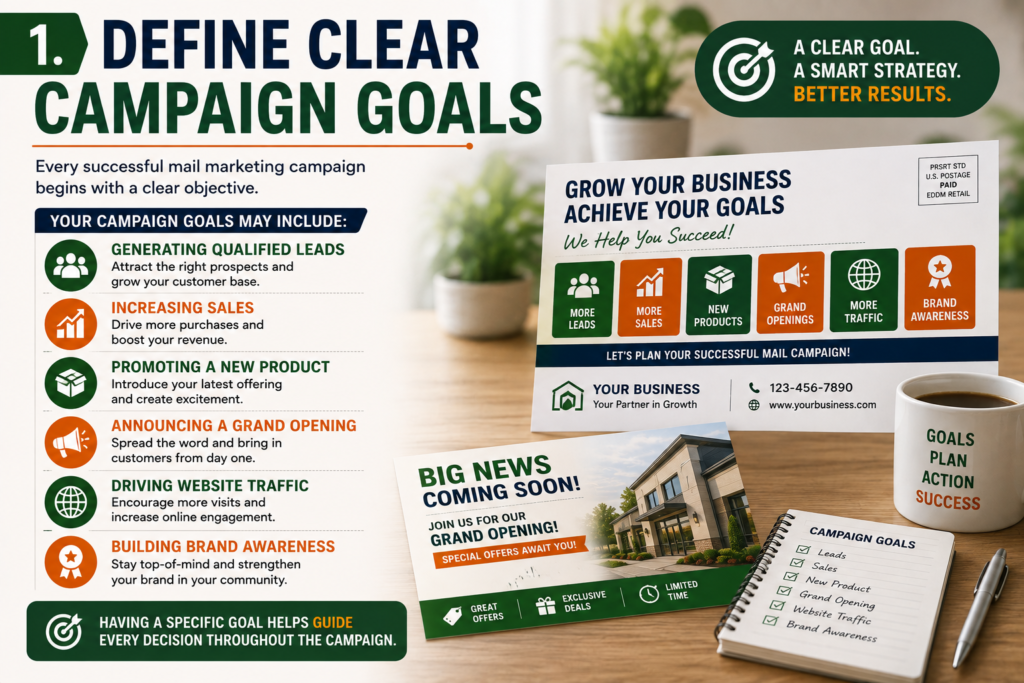
Every successful mail marketing campaign begins with a clear objective.
Your campaign goals may include:
- Generating qualified leads
- Increasing sales
- Promoting a new product
- Announcing a grand opening
- Driving website traffic
- Building brand awareness
Having a specific goal helps guide every decision throughout the campaign.
2. Target the Right Audience
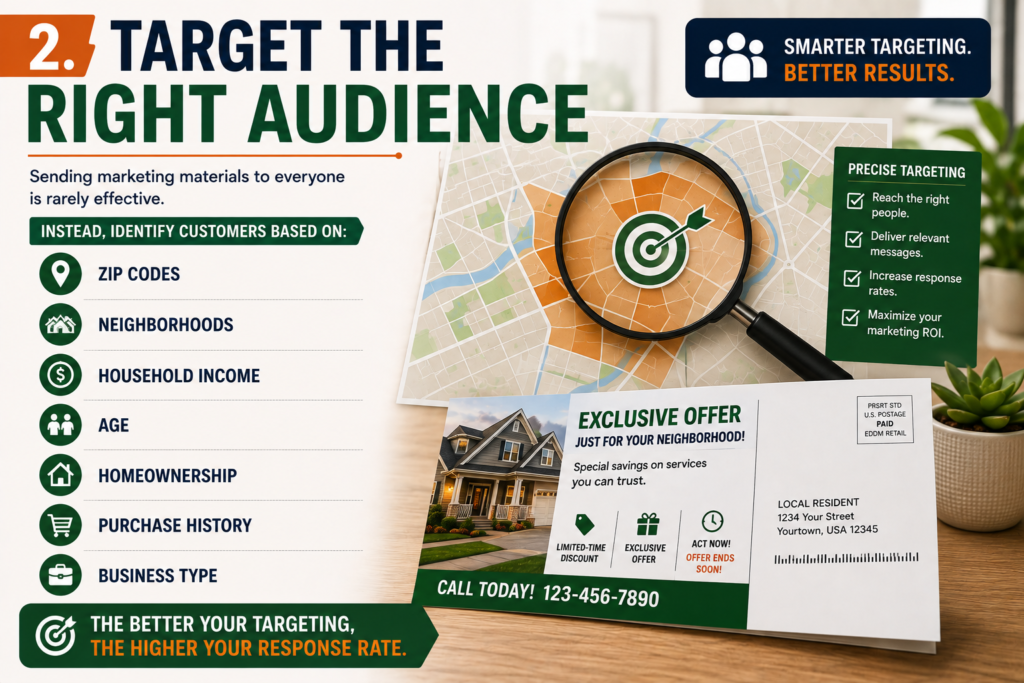
Sending marketing materials to everyone is rarely effective.
Instead, identify customers based on:
- ZIP codes
- Neighborhoods
- Household income
- Age
- Homeownership
- Purchase history
- Business type
The better your targeting, the higher your response rate.
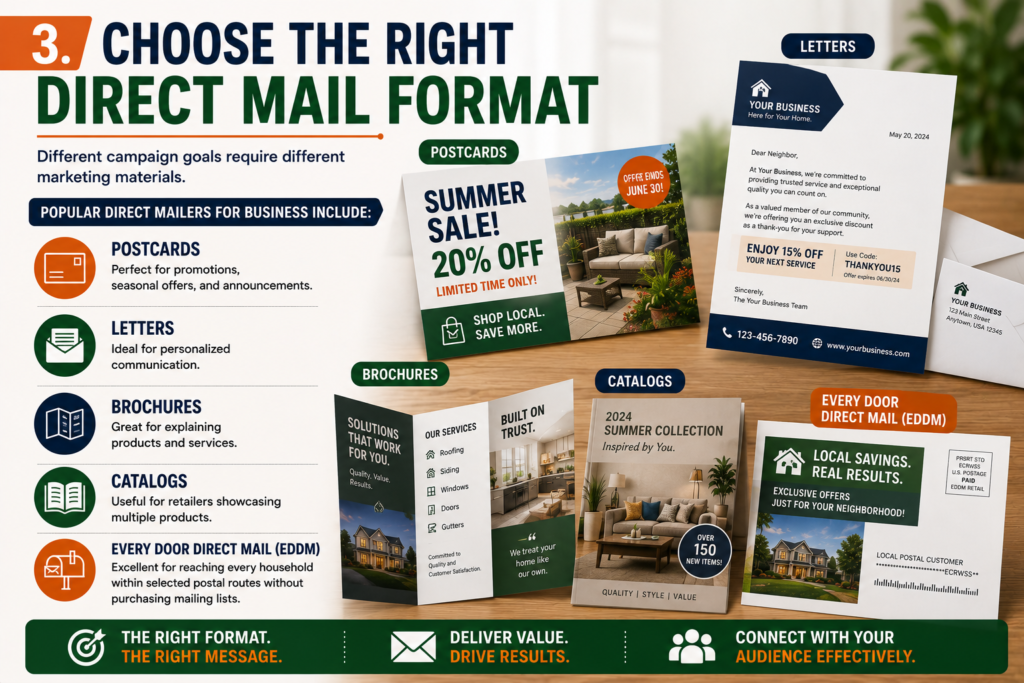
3. Choose the Right Direct Mail Format
Different campaign goals require different marketing materials.
Popular direct mailers for business include:
Postcards
Perfect for promotions, seasonal offers, and announcements.
Letters
Ideal for personalized communication.
Brochures
Great for explaining products and services.
Catalogs
Useful for retailers showcasing multiple products.
Every Door Direct Mail (EDDM)
Excellent for reaching every household within selected postal routes without purchasing mailing lists.
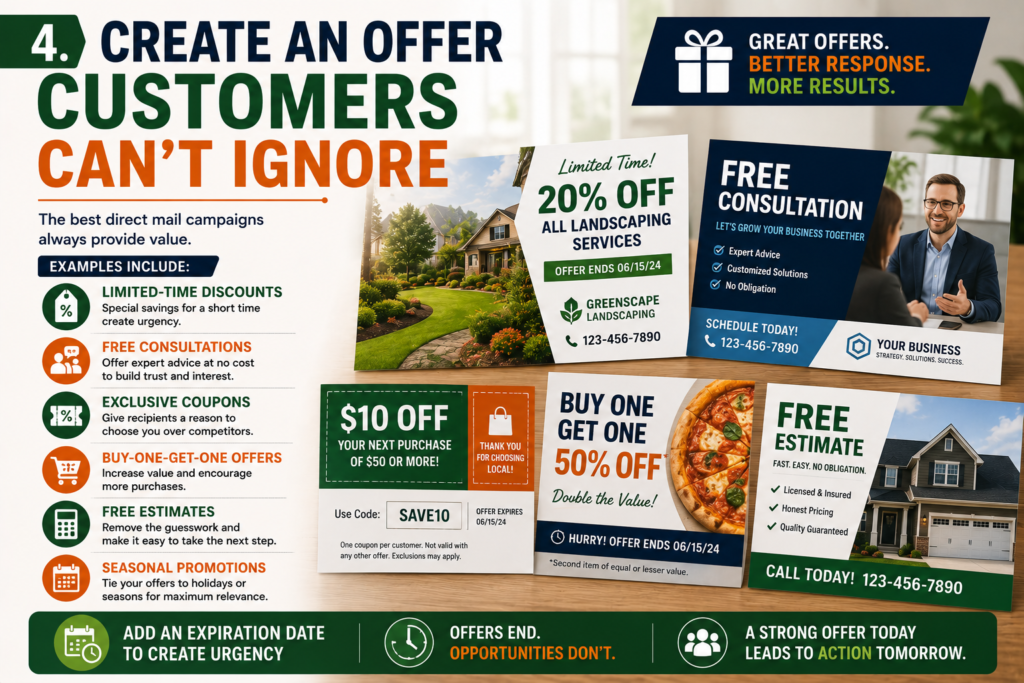
4. Create an Offer Customers Can’t Ignore
The best direct mail campaigns always provide value.
Examples include:
- Limited-time discounts
- Free consultations
- Exclusive coupons
- Buy-one-get-one offers
- Free estimates
- Seasonal promotions
Adding an expiration date encourages recipients to act quickly.
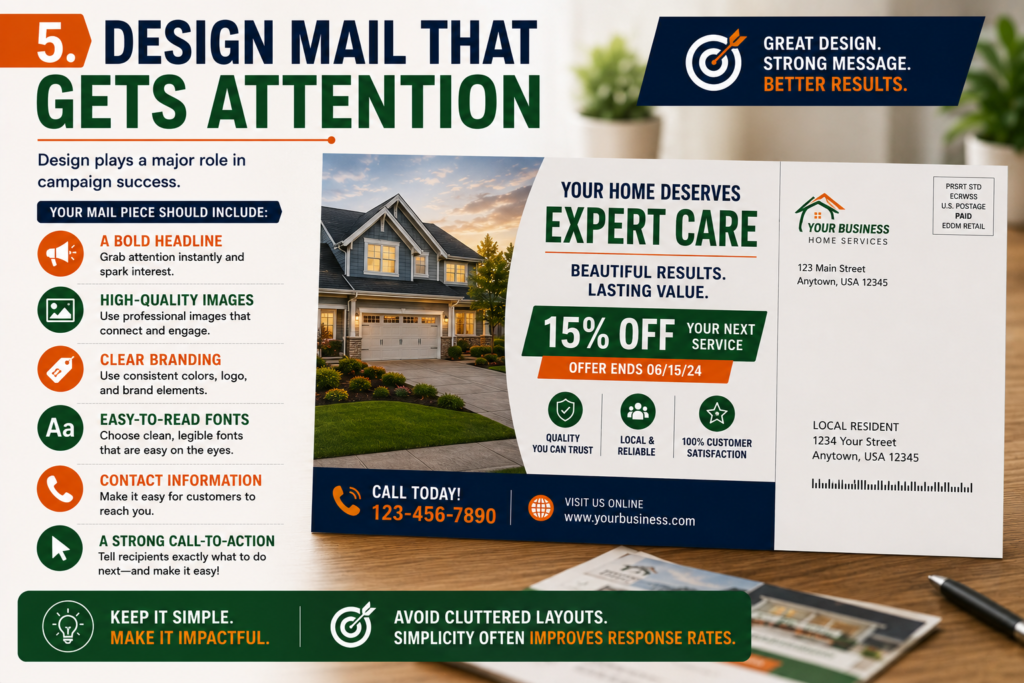
5. Design Mail That Gets Attention
Design plays a major role in campaign success.
Your mail piece should include:
- A bold headline
- High-quality images
- Clear branding
- Easy-to-read fonts
- Contact information
- A strong call-to-action
Avoid cluttered layouts. Simplicity often improves response rates.
6. Personalize Every Campaign
Personalized mail feels more relevant and encourages engagement.
Ways to personalize include:
- Using customer names
- Referencing local communities
- Tailoring offers
- Segmenting audiences
- Sending birthday or anniversary promotions
Personalization can significantly improve campaign performance.
7. Combine Direct Mail with Digital Marketing
Modern marketing works best when channels support one another.
Include:
- QR codes
- Personalized landing pages
- Online booking links
- Social media profiles
- Promotional codes
For example, recipients can scan a QR code on a postcard and immediately claim an offer online.
This creates a seamless customer journey.
8. Test Different Campaign Variations
Don’t assume your first campaign is your best.
Test different:
- Headlines
- Images
- Offers
- Calls-to-action
- Colors
- Formats
A/B testing helps identify what resonates most with your audience.
9. Track Campaign Performance
Every campaign should be measurable.
Monitor:
- Website traffic
- QR code scans
- Phone calls
- Coupon redemptions
- Appointment bookings
- Lead generation
- Sales
Tracking results helps improve future campaigns and maximize ROI.
10. Work with Professional Direct Mail Experts
Managing printing, mailing, targeting, and USPS requirements can be time-consuming.
Professional providers help businesses by offering:
- Audience targeting
- Graphic design
- Printing
- Mailing list management
- USPS compliance
- Campaign tracking
Partnering with experienced professionals allows businesses to focus on growth while ensuring campaigns are executed efficiently.
Common Mistakes to Avoid
Many businesses reduce campaign effectiveness by making avoidable mistakes.
Avoid:
- Targeting the wrong audience
- Weak offers
- Poor-quality design
- Missing contact information
- No call-to-action
- Ignoring campaign analytics
- Failing to integrate with digital marketing
Small improvements often lead to much better results.
Why Small Businesses Should Invest in Direct Mail
Small businesses often compete against larger companies with bigger advertising budgets.
Fortunately, direct mail advertising provides an affordable way to compete by focusing on local customers and personalized communication.
Whether you’re a restaurant, dental office, roofing company, real estate agency, retailer, or professional service provider, direct mail helps you stay visible in your community and attract qualified leads.
Frequently Asked Questions
Is direct mail advertising still effective?
Yes. Direct mail continues to produce strong response rates because it offers a physical, memorable experience that stands out from crowded digital channels.
What are the best direct mailers for business?
Postcards, brochures, letters, catalogs, and Every Door Direct Mail (EDDM) are among the most effective options, depending on your campaign goals.
How often should I send direct mail?
Many businesses achieve the best results by sending campaigns consistently, such as monthly or quarterly, while adjusting frequency based on customer engagement and campaign objectives.
Can direct mail be combined with digital marketing?
Absolutely. Combining direct mail with email marketing, social media, QR codes, landing pages, and local SEO creates a stronger multichannel marketing strategy.
Final Thoughts
A successful mail marketing campaign requires more than attractive printed materials. By focusing on clear goals, audience targeting, compelling offers, professional design, and consistent performance tracking, small businesses can turn direct mail advertising into a reliable source of leads and sales. Whether you’re sending postcards, brochures, or other direct mailers for business, combining print with digital marketing creates a powerful strategy that helps your brand stand out, build customer trust, and achieve long-term growth.