
Local businesses need marketing strategies that help them reach customers in specific neighborhoods and service areas. While digital advertising can provide online visibility, physical mail gives businesses another way to put their offers, services, and brand directly into customers’ hands.
USPS direct mail marketing provides several options for businesses that want to promote products and services through the mail. From targeted neighborhood campaigns to USPS Marketing Mail, businesses can choose mailing approaches based on their audience, campaign goals, and budget.
If your business is planning a direct mail campaign and needs help with targeting, design, printing, or mailing, Get a Free Quote to discuss your campaign and reach the customers who matter most.
In this guide, we’ll explain how local businesses can use USPS direct mail marketing, the different options available, and practical strategies for creating campaigns that generate awareness, engagement, and leads.
What Is USPS Direct Mail Marketing?
USPS direct mail marketing refers to using the United States Postal Service to distribute promotional materials to potential or existing customers.
Businesses can use physical mailpieces such as:
- Postcards
- Flyers
- Brochures
- Letters
- Catalogs
- Menus
- Promotional mailers
- Coupons
The campaign can be designed around a specific geographic area, customer segment, or mailing list.
USPS provides several tools and services that businesses can use to plan and execute direct mail campaigns. Its Every Door Direct Mail program, for example, allows businesses to select postal routes and reach addresses within those routes without purchasing a traditional mailing list.
Why Local Businesses Use USPS Direct Mail
Local businesses often depend on customers within a specific geographic area.
A restaurant may want to reach nearby households. A roofing company may want to target homeowners in selected neighborhoods. A dental practice may want to promote services to people living close to its office.
Direct mail allows businesses to focus their marketing on specific areas rather than advertising to a broad audience.
Reach Customers in Specific Neighborhoods
Geographic targeting is one of the major advantages of USPS direct mail.
With Every Door Direct Mail, businesses can use the USPS mapping tool to select neighborhoods and postal routes. The tool also provides demographic filters such as age, household size, and income.
This can help businesses identify areas that align with their ideal customer profile.
Create Physical Brand Exposure
Unlike a digital advertisement that can disappear as a user scrolls, a physical mailpiece arrives in the customer’s home or business.
A professionally designed postcard or brochure can provide a physical reminder of:
- Your business
- Your services
- Your current promotion
- Your location
- Your website
- Your contact information
This can be especially useful for businesses that depend on local awareness.
USPS Marketing Mail Explained
USPS Marketing Mail is a USPS service used for advertising and other eligible promotional materials.
USPS states that Marketing Mail can include printed matter, flyers, circulars, advertising, newsletters, bulletins, catalogs, and certain parcels. Standard USPS Marketing Mail generally requires a minimum mailing quantity of 200 pieces or 50 pounds.
Businesses can use USPS Marketing Mail for campaigns where they have an eligible mailing list and want to distribute promotional materials at applicable bulk-mail rates.
When USPS Marketing Mail Can Be Useful
USPS Marketing Mail can be considered for campaigns such as:
- Promotional offers
- Product announcements
- Catalogs
- Local business advertising
- Seasonal promotions
- Customer reactivation
- Service promotions
- Business-to-business marketing
Eligibility, preparation requirements, pricing, and delivery characteristics depend on the specific mailing, so businesses should review current USPS requirements before launching a campaign.
Every Door Direct Mail for Local Businesses
Every Door Direct Mail, commonly called EDDM, is particularly relevant to businesses that want to reach customers within selected geographic areas.
Instead of addressing individual recipients by name, EDDM can deliver mailpieces to every address along selected routes.
USPS currently allows EDDM Retail mailings of at least 200 and up to 5,000 pieces per day per ZIP Code. Businesses can select routes using the EDDM Online Tool and then prepare and drop off the mailing according to USPS requirements.
Businesses That Can Use EDDM
EDDM can be useful for many local businesses, including:
- Restaurants
- Real estate businesses
- Dental practices
- Gyms
- Retail stores
- Roofing companies
- HVAC companies
- Plumbing companies
- Landscaping businesses
- Auto dealerships
- Home improvement companies
- Insurance agencies
The right audience and route selection will depend on the business’s service area and campaign goals.
1. Target the Right Geographic Area
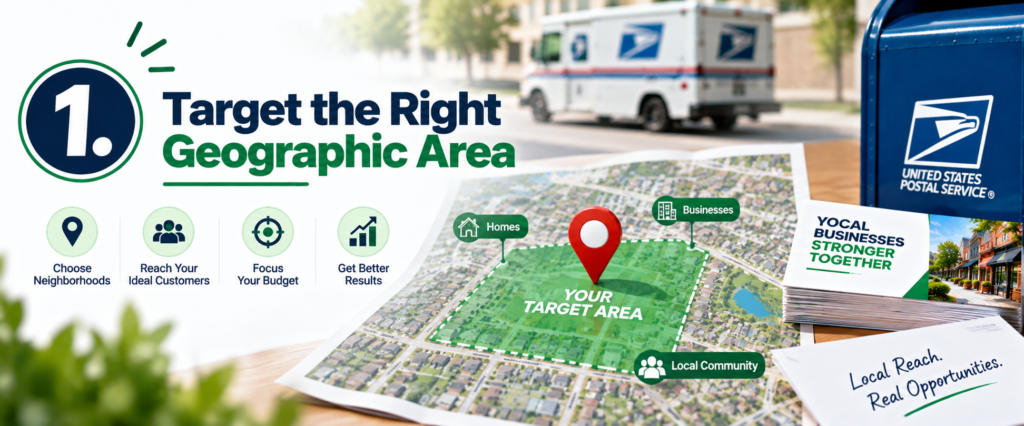
A successful direct mail campaign starts with choosing an appropriate audience.
For a local business, this often means identifying neighborhoods where potential customers are most likely to live or work.
Consider Your Service Area
Before choosing routes, determine:
- How far customers typically travel
- Where existing customers live
- Which neighborhoods you currently serve
- Which areas have growth potential
- Where competitors are active
- Which locations fit your ideal customer profile
For example, a local HVAC company may focus on neighborhoods within its normal service radius rather than mailing an entire city.
2. Create a Strong Mailpiece
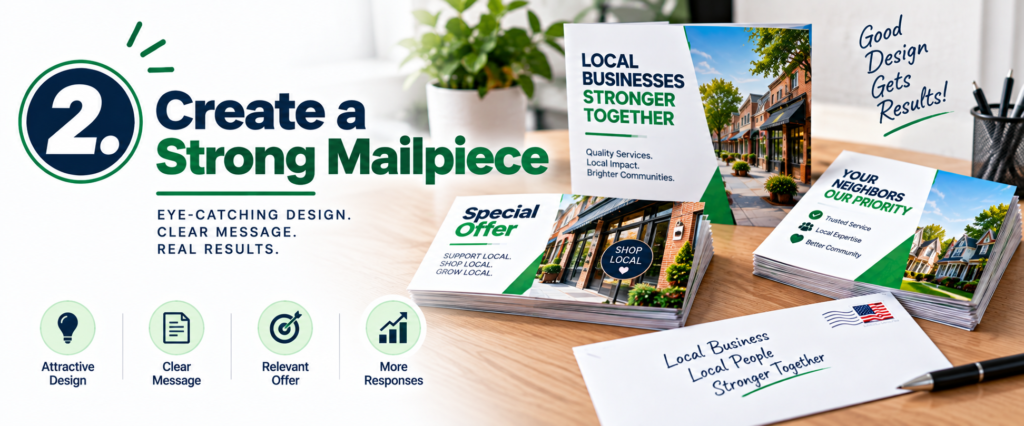
Your mailpiece needs to communicate its main message quickly.
Whether you’re using a postcard, flyer, or brochure, avoid filling the design with unnecessary information.
Include the Most Important Elements
A local direct mail piece should typically include:
- Business name
- Strong headline
- Main offer
- Key benefit
- Phone number
- Website
- Address, when relevant
- Call-to-action
- QR code, when appropriate
The recipient should immediately understand what you’re offering and what they should do next.
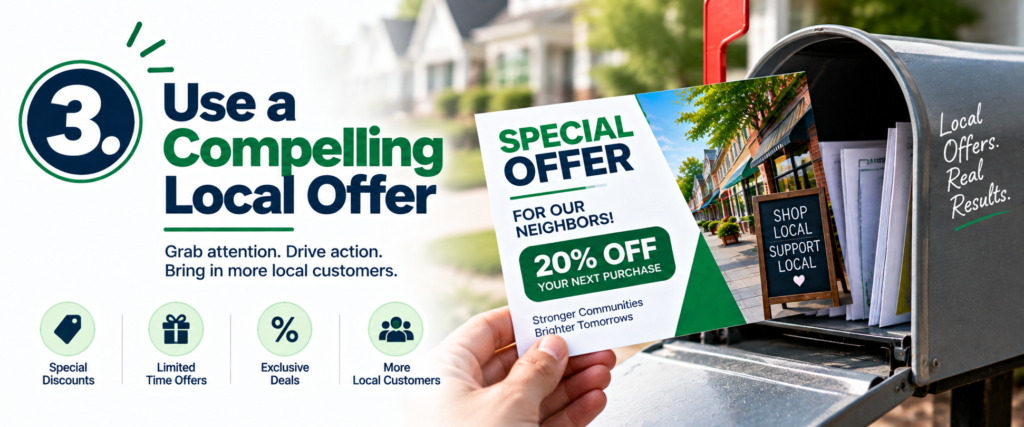
3. Use a Compelling Local Offer
A strong offer can give recipients a reason to respond.
Depending on the business, offers might include:
- Percentage discounts
- Free consultations
- Free estimates
- New-customer specials
- Coupons
- Seasonal promotions
- Buy-one-get-one offers
- Limited-time services
- Complimentary assessments
Create a Clear Reason to Act
Instead of simply saying:
“Contact us to learn more.”
Consider a more specific call-to-action such as:
“Call today for your free estimate.”
“Scan to claim your local offer.”
“Schedule your consultation this week.”
A specific action can make the next step easier for the recipient to understand.
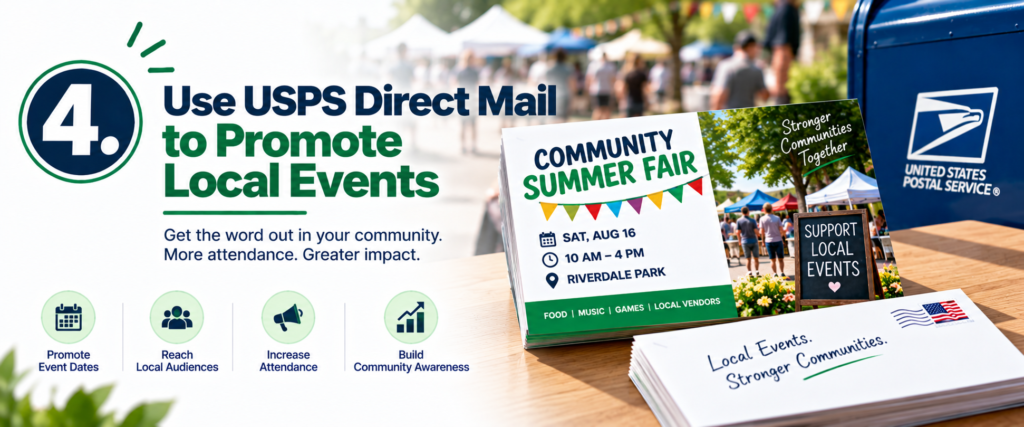
4. Use USPS Direct Mail to Promote Local Events
Physical mail can be useful for promoting events that depend on local participation.
Businesses can promote:
- Grand openings
- Store events
- Community events
- Seasonal sales
- Workshops
- Open houses
- Special promotions
For example, a new restaurant could mail postcards to nearby households announcing its opening and offering a limited-time discount.
USPS specifically identifies uses such as sales, grand openings, coupons, and local promotions as examples for EDDM.
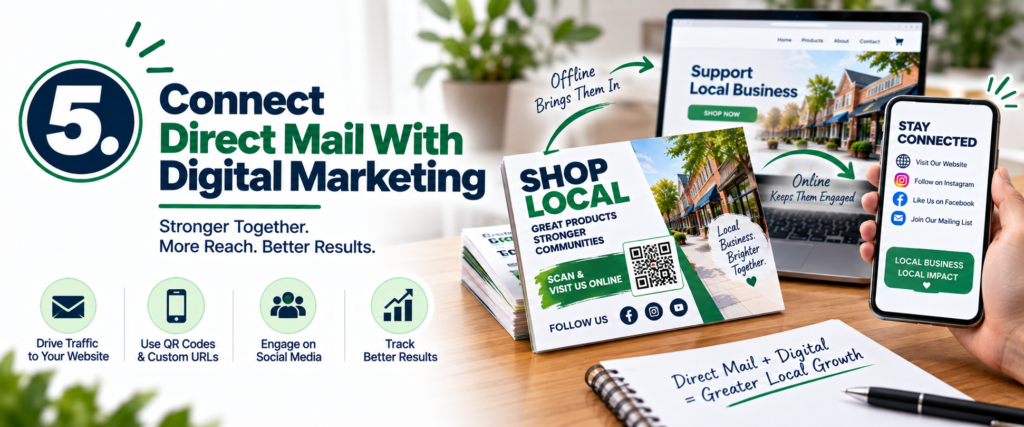
5. Connect Direct Mail With Digital Marketing
USPS direct mail marketing doesn’t have to operate independently from your digital strategy.
A physical mailpiece can direct customers to a digital destination using a QR code or campaign-specific URL.
Use QR Codes
A QR code can send recipients to:
- A landing page
- Online appointment booking
- A special offer
- A product page
- A coupon
- A contact form
- A business website
This creates a connection between physical advertising and digital conversion.
USPS also promotes Informed Delivery as an option for integrating physical mail with digital marketing experiences.
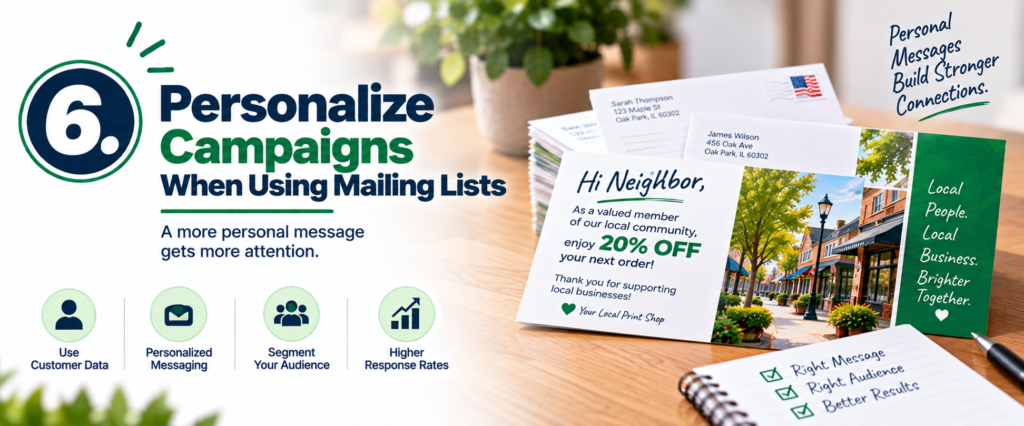
6. Personalize Campaigns When Using Mailing Lists
Not every USPS campaign has to reach every household.
Businesses with their own customer or prospect mailing lists can create more personalized campaigns.
Personalization may include:
- Customer name
- Previous purchase
- Service history
- Location
- Customer segment
- Special offer
For example, a dental practice might send different messages to existing patients and prospective patients.
Segment Your Audience
You can divide a mailing list into groups such as:
- New customers
- Existing customers
- Previous customers
- High-value customers
- Prospects
- Geographic segments
Different groups can receive different offers and messaging.
7. Track Campaign Performance
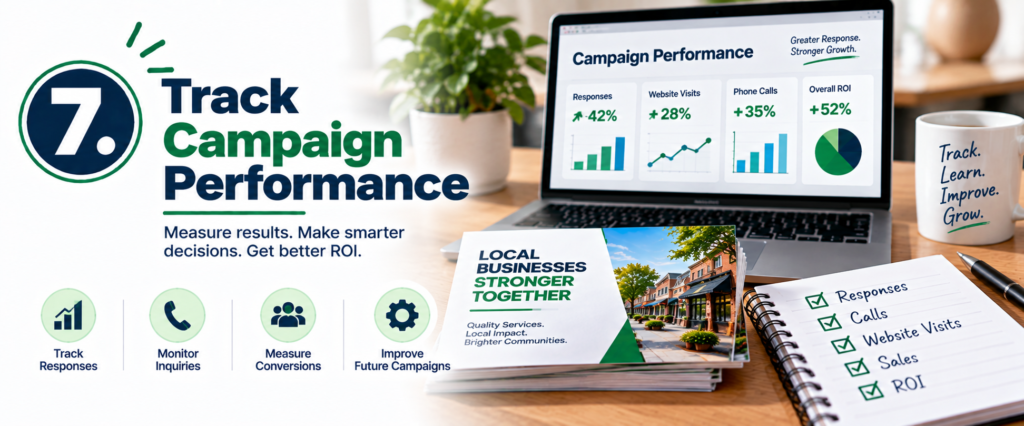
One of the most important parts of direct mail marketing is measuring the response.
Without tracking, it can be difficult to determine whether a campaign generated meaningful business results.
Metrics to Monitor
Depending on the campaign, track:
- QR code scans
- Website visits
- Phone calls
- Form submissions
- Coupon redemptions
- Appointment bookings
- Store visits
- New customers
- Leads
- Sales
Use Campaign-Specific Tracking
Consider creating:
- Unique QR codes
- Dedicated landing pages
- Promotional codes
- Campaign-specific URLs
- Dedicated phone numbers
For example, if a postcard contains a unique promotional code, you can identify customers who responded to that specific mailing.
USPS Direct Mail vs. EDDM
USPS direct mail marketing is a broad category that can include multiple mailing approaches.
EDDM is one specific USPS program designed to help businesses reach selected postal routes without using individual names and addresses.
EDDM Can Be Useful When:
- You want neighborhood coverage.
- You don’t have a mailing list.
- You operate a local business.
- You want to reach households in specific postal routes.
- You are promoting a local offer.
Addressed Direct Mail Can Be Useful When:
- You have an existing customer list.
- You want personalized messaging.
- You need to reach specific businesses or individuals.
- You are running a customer reactivation campaign.
- You want more detailed audience segmentation.
The right approach depends on your campaign objective, audience, and available data.
How to Build a USPS Direct Mail Campaign
Creating a successful campaign requires planning before the mailpieces reach the post office.
Step 1: Define Your Goal
Decide what you want the campaign to accomplish.
Examples include:
- Generate leads
- Increase store visits
- Promote a new service
- Introduce a business
- Increase appointments
- Promote a sale
- Re-engage customers
Step 2: Choose Your Audience
Determine whether you want to target:
- Specific customers
- Prospects
- Businesses
- Households
- Neighborhoods
- Postal routes
Step 3: Choose Your Mail Format
Select a format that matches your message.
Postcards are useful for concise offers.
Brochures provide more space for service information.
Letters can support personalized communication.
Catalogs can showcase multiple products.
Step 4: Develop Your Offer
Give recipients a clear reason to respond.
Make sure the offer is easy to understand.
Step 5: Design the Mailpiece
Use a clear headline, professional images, consistent branding, and a strong call-to-action.
Step 6: Prepare the Mailing
Follow applicable USPS requirements for the selected mailing service.
For EDDM, businesses need to follow USPS route selection, mailpiece, bundling, forms, and drop-off requirements.
Step 7: Launch the Campaign
Coordinate printing, preparation, postage, and delivery.
Step 8: Track the Results
Monitor responses and compare results against your campaign goals.
Common USPS Direct Mail Marketing Mistakes
Even a well-designed campaign can underperform when important details are overlooked.
Choosing the Wrong Audience
Sending mail outside your service area can waste marketing resources.
Making the Design Too Complicated
Too much information can make the main message difficult to understand.
Using a Weak Offer
A generic message may not give recipients enough motivation to act.
Forgetting the Call-to-Action
Tell customers exactly what they should do next.
Ignoring Digital Follow-Up
A customer may need multiple touchpoints before taking action. Consider supporting your mail campaign with digital marketing when appropriate.
Failing to Track Results
If you don’t measure responses, you won’t know which campaigns deserve more investment.
Industries That Can Benefit From USPS Marketing Mail
USPS direct mail can be adapted to many local industries.
Restaurants
Restaurants can promote:
- New menu items
- Coupons
- Grand openings
- Seasonal offers
- Delivery promotions
Home Services
HVAC, plumbing, roofing, landscaping, and remodeling businesses can target homeowners within specific service areas.
Real Estate
Real estate professionals can promote:
- New listings
- Open houses
- Neighborhood market updates
- Home valuation services
- Local property information
Healthcare and Dental
Practices can use direct mail for appropriate promotional and community outreach campaigns while following applicable privacy and regulatory requirements.
Retail
Retail stores can use postcards and promotional mailers to announce sales, new products, and seasonal events.
Benefits of Working With a Direct Mail Service Provider
Businesses don’t necessarily need to manage every part of a mailing campaign themselves.
A professional direct mail provider can assist with:
- Mailing list management
- Audience targeting
- Graphic design
- Printing
- Personalization
- Addressing
- Mail preparation
- Postage
- Campaign coordination
USPS itself provides access to directories and third-party direct mail specialists that can help businesses with formatting, design, printing, and mailing.
Simplify Campaign Management
Using a single provider for multiple campaign steps can reduce the amount of coordination required internally.
This can be especially helpful when a business is running recurring or large-volume campaigns.
Frequently Asked Questions
What is USPS direct mail marketing?
USPS direct mail marketing is the use of USPS mail services to distribute promotional materials such as postcards, flyers, letters, brochures, and catalogs to customers or prospects.
What is USPS Marketing Mail?
USPS Marketing Mail is a USPS mail category used for eligible advertising and promotional materials, including printed matter, flyers, circulars, newsletters, catalogs, and other qualifying pieces. Current USPS rules specify minimum quantity and eligibility requirements.
What is the difference between USPS Marketing Mail and EDDM?
USPS Marketing Mail is a mail category with eligibility and preparation requirements. EDDM is a specific USPS service that allows businesses to select postal routes and reach addresses along those routes without needing individual names and addresses.
Is USPS direct mail good for local businesses?
USPS direct mail can be useful for local businesses because campaigns can be designed around geographic areas, neighborhoods, customer lists, and specific promotional goals.
Can I use USPS direct mail without a mailing list?
Yes. EDDM is specifically designed to let businesses select postal routes and reach addresses along those routes without purchasing or providing an individual mailing list.
How many pieces are required for USPS Marketing Mail?
USPS currently lists a minimum of 200 pieces or 50 pounds for USPS Marketing Mail. Specific eligibility and preparation rules apply.
Can direct mail be combined with digital marketing?
Yes. Businesses can connect direct mail with QR codes, landing pages, online forms, email, social media, and other digital channels to create a multichannel campaign.
Final Thoughts
USPS direct mail marketing gives local businesses another way to connect with customers in specific geographic areas. From postcards and promotional flyers to targeted mailing lists and Every Door Direct Mail, businesses have multiple options for reaching potential customers through the mailbox.
The most effective approach starts with a clear goal and the right audience. From there, businesses can create a compelling offer, design an easy-to-understand mailpiece, connect the campaign with digital marketing, and track customer responses.
Whether you’re promoting a grand opening, generating local leads, increasing appointments, or introducing a new service, USPS mailing options can be incorporated into a broader marketing strategy.
If you’re ready to reach more local customers with a professionally planned campaign, Get a Free Quote to explore USPS direct mail marketing options for your business.