
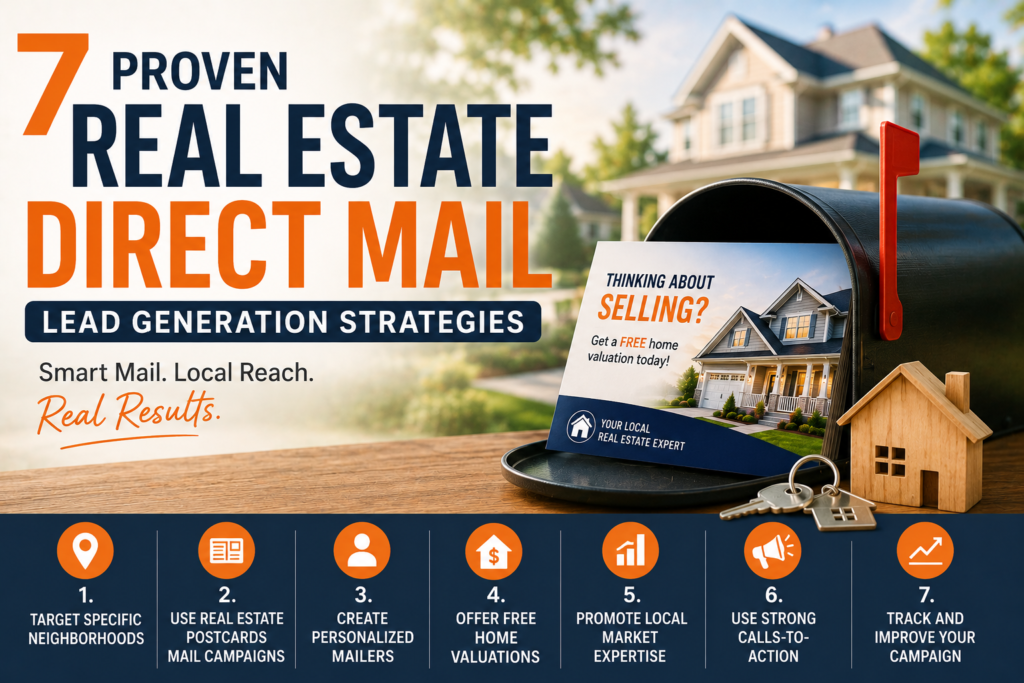
In 2026, businesses have more digital marketing options than ever. From social media and search advertising to email campaigns and online video, companies can reach potential customers across multiple digital channels. Yet, the traditional postcard remains a valuable marketing tool for businesses that want to reach customers directly and create a physical connection with their brand.
A well-planned postcard marketing campaign can help businesses promote special offers, increase local awareness, generate leads, and drive customers to websites or physical locations. Unlike digital advertisements that can disappear with a scroll, postcards provide a tangible message that recipients can see, hold, and revisit.
Planning a postcard campaign for your business? Get a Free Quote to discuss your mailing goals, audience, postcard format, and campaign budget with our team.
In this guide, we’ll explore seven proven reasons businesses continue using postcard marketing in 2026 and explain how postcards can support modern lead generation and customer acquisition strategies.
What Is a Postcard Marketing Campaign?
A postcard marketing campaign is a direct marketing strategy in which businesses send promotional postcards to potential or existing customers.
Postcards can be used to promote:
- Special offers
- New products
- Seasonal sales
- Grand openings
- Local events
- New services
- Discounts and coupons
- Appointments
- Real estate listings
- Home improvement services
- Restaurant promotions
Businesses can send postcards to existing customer lists or target specific geographic areas based on ZIP codes, neighborhoods, and other audience characteristics.
This flexibility makes postcard marketing useful for both local businesses and companies targeting larger customer segments.
1. Postcards Capture Attention Quickly
One of the biggest advantages of postcards is their immediate visibility.
Unlike letters, postcards don’t require recipients to open an envelope before seeing the message. The headline, images, offer, and branding are visible as soon as the postcard is picked up.
A strong postcard can communicate its primary message within seconds.
For example:
20% Off Your First Service
Schedule Today and Save
This immediate exposure can make postcards useful for businesses competing for customer attention in crowded markets.
Keep the Message Simple
A successful postcard doesn’t need to contain every detail about your business.
Instead, focus on:
- One primary offer
- One compelling headline
- One clear call-to-action
- Essential contact information
The simpler the message, the easier it is for recipients to understand what you want them to do next.
2. Postcards Reach Local Customers
Local businesses can use postcard marketing to focus on specific geographic areas.
This makes postcards particularly useful for businesses such as:
- Restaurants
- Dental practices
- Real estate agencies
- Roofing companies
- HVAC businesses
- Plumbing companies
- Landscaping services
- Gyms
- Retail stores
- Home improvement companies
Instead of sending marketing materials throughout an entire city, businesses can concentrate on neighborhoods where their ideal customers live.
Geographic targeting can help reduce wasted marketing spend while making the campaign more relevant to recipients.
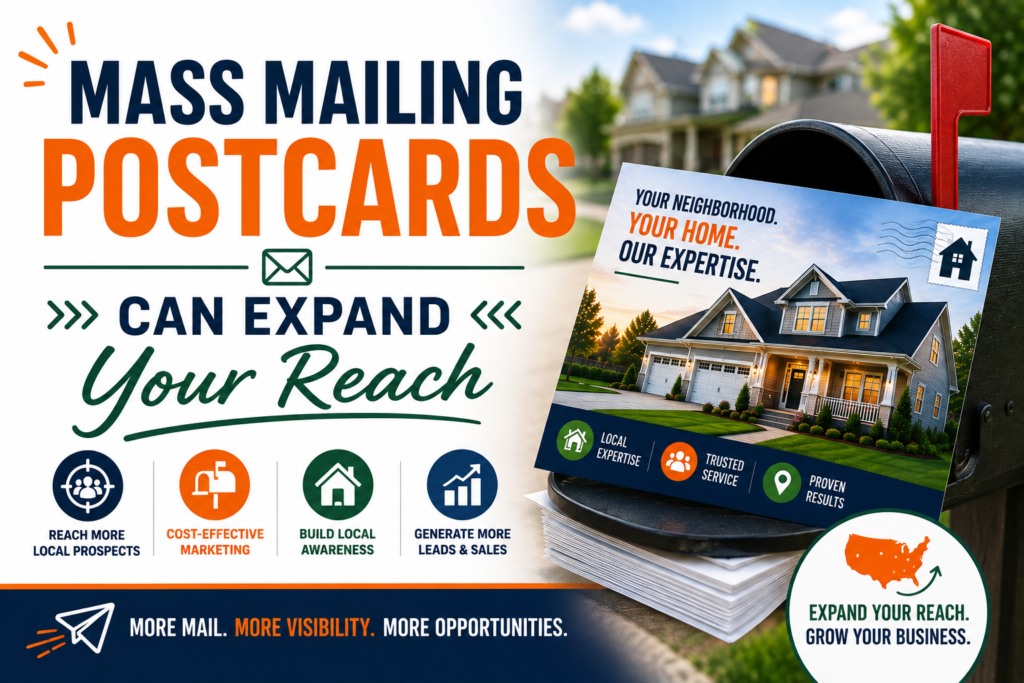
3. Mass Mailing Postcards Can Expand Your Reach
Mass mailing postcards allow businesses to reach a large number of potential customers within a specific geographic area.
For businesses trying to build brand awareness, reaching a larger audience can create valuable exposure.
Mass mailing postcards can be used for:
- New business launches
- Seasonal promotions
- Store openings
- Community events
- Service-area expansion
- Large promotional campaigns
- Local awareness campaigns
However, reaching a large audience doesn’t mean sending mail randomly.
Businesses should still consider factors such as location, demographics, property characteristics, and service areas when planning a campaign.
Balance Reach With Targeting
A successful campaign should balance quantity with relevance.
Sending 20,000 postcards to an audience that has little interest in your products may produce weaker results than sending 5,000 targeted postcards to highly relevant prospects.
The goal is not simply to send more postcards. It’s to reach the right people with the right message.
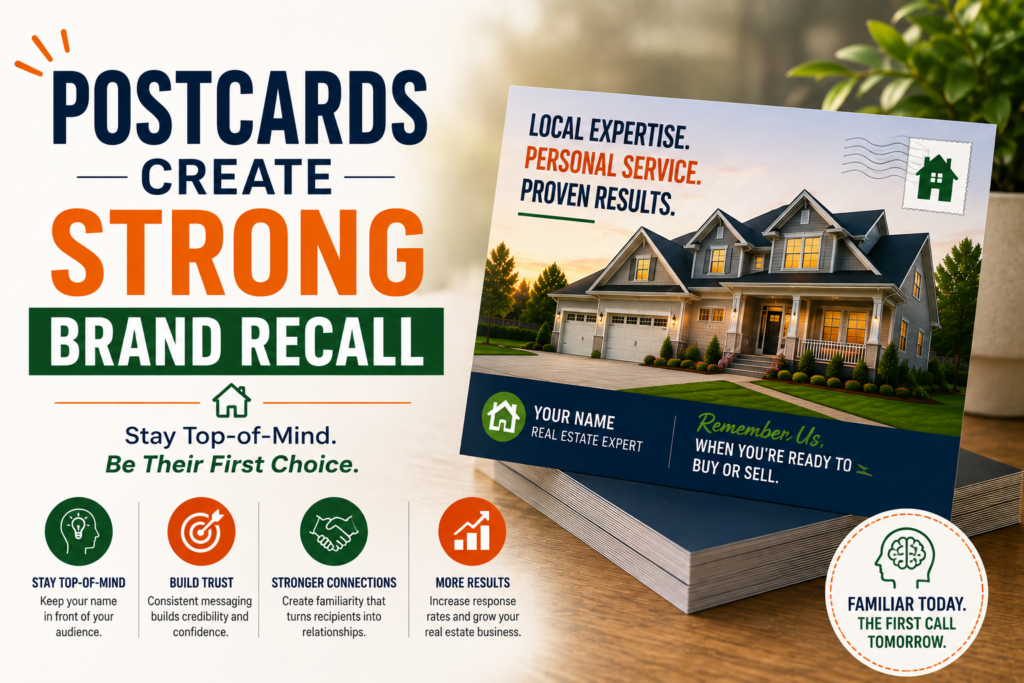
4. Postcards Create Strong Brand Recall
Digital advertisements can disappear quickly.
A customer may see an online advertisement for only a few seconds before moving on to another page or post.
A postcard can remain on a kitchen counter, refrigerator, desk, bulletin board, or other visible location.
This creates opportunities for repeated exposure.
For example, a homeowner may receive a postcard from a local roofing company and not need the service immediately. If the postcard remains visible, that homeowner may remember the company months later when a roofing problem occurs.
This type of physical brand exposure can help businesses stay top-of-mind.
5. Postcards Can Support Digital Marketing
Modern postcard marketing doesn’t have to compete with digital marketing.
Instead, the two can work together.
A postcard can include a QR code that directs recipients to:
- A website
- Landing page
- Online store
- Appointment booking page
- Promotional offer
- Contact form
- Product page
- Event registration
This creates a connection between offline and online marketing.
For example:
Postcard → QR Code → Landing Page → Lead Form → Sales Follow-Up
This approach gives businesses another way to measure campaign performance and generate digital leads from physical marketing materials.
Combine Postcards With Other Channels
Businesses can integrate postcard campaigns with:
- Local SEO
- Google Ads
- Email marketing
- Social media
- SMS marketing
- Retargeting
- Content marketing
Using multiple channels can create several customer touchpoints and reinforce the same marketing message.
6. Postcards Can Generate Measurable Leads
Another reason businesses continue using postcard campaigns is that results can be tracked.
Instead of simply sending postcards and hoping customers respond, businesses can use tracking methods such as:
- QR codes
- Unique landing pages
- Promotional codes
- Dedicated phone numbers
- Personalized URLs
- Online forms
For example, a restaurant could send a postcard with the offer:
Get $10 Off Your Next Order
Scan the QR Code to Redeem
The business can then track how many customers scan the QR code and redeem the promotion.
These measurements help businesses understand whether their campaign is generating meaningful results.
Important Metrics to Track
Monitor:
- Response rate
- QR code scans
- Website traffic
- Phone calls
- Coupon redemptions
- Leads generated
- Appointments
- Sales
- Cost per lead
- Customer acquisition cost
Tracking these metrics can help businesses improve future campaigns.
7. Professional Postcard Marketing Companies Can Simplify Campaigns
Planning a postcard campaign involves more than creating a design and sending it to a printer.
Businesses may need to manage:
- Audience targeting
- Mailing lists
- Graphic design
- Copywriting
- Printing
- Postage
- Addressing
- Sorting
- Fulfillment
- Tracking
- Campaign analysis
Working with experienced postcard marketing companies can simplify the process.
A professional provider may help businesses manage multiple stages of the campaign, allowing business owners to focus on their customers and operations.
What to Look for in a Postcard Marketing Provider
When evaluating postcard marketing companies, consider whether they offer:
- Professional design
- Mailing list support
- Printing services
- Targeted mailing
- Postage management
- Campaign planning
- Tracking solutions
- Digital integration
- Reporting
- Flexible quantities
Choosing the right provider can make it easier to build and manage a campaign from beginning to end.
How to Create an Effective Postcard Marketing Campaign
A successful postcard campaign starts with a clear strategy.
Step 1: Define Your Goal
Decide what you want the campaign to accomplish.
Possible goals include:
- Generate leads
- Increase sales
- Promote an event
- Attract new customers
- Increase appointments
- Build local awareness
- Promote a new service
Step 2: Identify Your Audience
Determine who is most likely to respond to your offer.
Consider:
- Location
- ZIP code
- Demographics
- Homeownership
- Income
- Existing customer status
- Business type
- Service area
Step 3: Choose Your Offer
Give recipients a reason to respond.
Examples include:
- Percentage discounts
- Free consultations
- Free estimates
- Coupons
- Limited-time promotions
- New customer offers
Step 4: Design Your Postcard
Use:
- A strong headline
- High-quality images
- Simple messaging
- Consistent branding
- Clear contact details
- A prominent CTA
Step 5: Add a Call-to-Action
Tell recipients exactly what to do.
Examples include:
- Call Today
- Visit Our Website
- Claim Your Offer
- Schedule an Appointment
- Scan to Learn More
- Get a Free Quote
Step 6: Track Results
Use QR codes, landing pages, promotional codes, or dedicated contact methods to measure performance.
Step 7: Improve Future Campaigns
Analyze the results and test new:
- Headlines
- Offers
- Designs
- Audiences
- Mailing frequencies
- Calls-to-action
Continuous optimization can help improve campaign performance over time.
Best Practices for Postcard Marketing in 2026
Businesses should keep several best practices in mind when creating postcard campaigns.
Use Mobile-Friendly Landing Pages
If your postcard includes a QR code, make sure the destination page works properly on smartphones.
Focus on One Main Offer
Don’t overwhelm recipients with too many promotions.
Make Your CTA Obvious
Your call-to-action should be easy to find and understand.
Use High-Quality Images
Professional visuals can improve the overall impression of your business.
Keep Branding Consistent
Use the same logo, colors, messaging, and brand identity across your postcard and digital channels.
Personalize When Possible
Personalized messages can make campaigns more relevant to specific audiences.
Test Different Campaigns
Experiment with different designs, offers, and audiences to determine what performs best.
Industries That Can Benefit From Postcard Marketing
Many businesses can use postcard campaigns to reach customers.
Industries include:
- Real estate
- Healthcare
- Dental practices
- Restaurants
- Retail
- Home improvement
- Roofing
- HVAC
- Plumbing
- Landscaping
- Automotive
- Fitness
- Financial services
- Professional services
The strategy should be customized based on the industry’s audience and marketing objectives.
Common Postcard Marketing Mistakes to Avoid
Even a well-designed campaign can underperform if the strategy isn’t properly planned.
Avoid these common mistakes:
Sending to an Irrelevant Audience
Poor targeting can result in wasted printing and postage.
Using Too Much Text
Recipients should be able to understand your main message quickly.
Having a Weak Offer
Give customers a compelling reason to respond.
Forgetting the CTA
Always tell recipients what action to take next.
Using Low-Quality Design
Your postcard represents your business, so professional presentation matters.
Not Tracking Results
Without tracking, you can’t determine whether the campaign is generating a worthwhile return.
Relying Only on One Channel
Integrating postcards with digital marketing can create additional opportunities for engagement.
Are Postcards Still Effective in 2026?
Yes, postcards can still be an effective marketing channel when they’re strategically planned.
Businesses today compete for attention across crowded digital environments. Email inboxes, social media feeds, search results, and online advertisements are filled with promotional messages.
A physical postcard offers a different type of customer experience.
It can:
- Create physical brand exposure
- Reach specific geographic areas
- Promote local offers
- Support digital campaigns
- Generate trackable responses
- Reinforce brand recognition
The key is to use postcards strategically rather than treating them as a one-size-fits-all marketing solution.
Frequently Asked Questions
What is a postcard marketing campaign?
A postcard marketing campaign involves sending promotional postcards to potential or existing customers to promote products, services, offers, events, or brand messages.
Are mass mailing postcards effective?
Mass mailing postcards can be effective for businesses that want broad geographic reach. Results depend on factors such as audience targeting, offer, design, campaign frequency, and messaging.
How much does postcard marketing cost?
Costs depend on factors such as postcard size, quantity, printing, design, postage, mailing lists, targeting, and fulfillment. Requesting a customized quote can provide a more accurate estimate.
What are the best postcard marketing companies?
The right provider depends on your campaign requirements. Look for companies that can assist with targeting, design, printing, mailing, fulfillment, tracking, and campaign management.
Can postcards work with digital marketing?
Yes. QR codes, landing pages, email marketing, social media, local SEO, and online advertising can complement a postcard campaign and create a multichannel customer journey.
How often should a business send postcards?
The ideal frequency depends on the audience, campaign goals, budget, and industry. Consistent campaigns can help maintain brand awareness, but businesses should monitor results to determine the most effective schedule.
Final Thoughts
Postcard marketing continues to have a place in modern business marketing because it provides something many digital channels cannot: a physical interaction with your brand. When strategically targeted and professionally designed, postcards can help businesses reach local customers, generate leads, promote offers, and strengthen brand awareness.
A successful postcard marketing campaign isn’t simply about printing thousands of pieces and putting them in the mail. It requires the right audience, compelling messaging, professional design, a clear call-to-action, and reliable tracking.
By combining mass mailing postcards with targeted audience strategies and digital marketing tools, businesses can create campaigns that reach customers both offline and online.
Whether you’re planning a local promotion, launching a new service, or looking for another way to generate leads, postcard marketing can be a valuable addition to your 2026 marketing strategy.
Ready to build a postcard campaign for your business? Get a Free Quote and discuss your audience, campaign goals, mailing requirements, and budget with the We Do For You team.